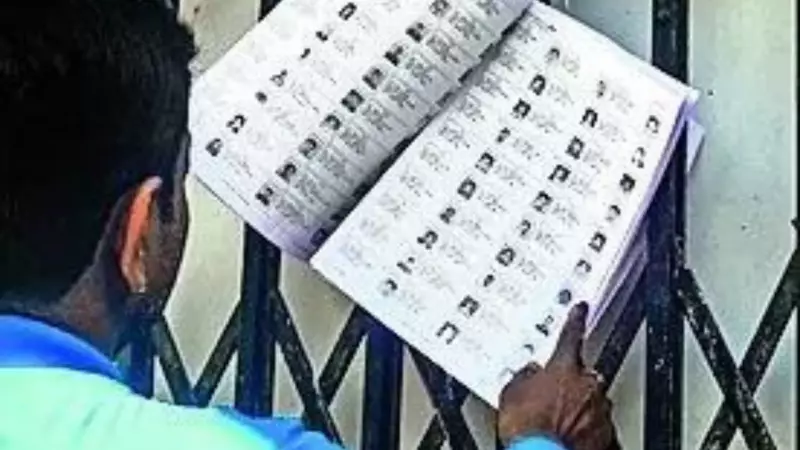
Supreme Court Orders Transparency in Kerala Voter List Revision
The Supreme Court of India issued a significant directive to the Election Commission on Thursday. The court instructed the poll body to make public the names of individuals excluded from the draft electoral rolls in Kerala. This action follows a special intensive revision process conducted in the state.
Court Seeks to Protect Voter Rights
A bench led by Chief Justice Surya Kant delivered this order. The bench emphasized the need for transparency to enable affected voters to file proper objections. The court also asked the Election Commission to consider extending the deadline for submitting objections. The bench suggested a preferable extension of two weeks to give people adequate time.
The Election Commission's counsel responded during the hearing. They stated that the commission would consider the request for extending the deadline. This development occurred during proceedings on a batch of petitions challenging the special intensive revision process in Kerala.

Petitioners Raise Serious Concerns
Multiple petitioners brought this case before the Supreme Court. The state of Kerala itself is among the petitioners. Senior political leaders have also joined the legal challenge. These include PK Kunhalikutty of the Indian Union Muslim League and MV Govindan Master of the Communist Party of India (Marxist).
The petitions argue that the current execution of the special intensive revision process poses significant risks. They claim the process could disenfranchise a massive segment of Kerala's population. Technical errors and inadequate redressal mechanisms contribute to this concern according to the pleas.
Alarming Statistics and Practical Difficulties
During the hearing, lawyers for the petitioners presented startling data. They submitted that draft rolls released after the revision show nearly twenty-four lakh names deleted. That represents approximately 2.4 million voters potentially removed from the electoral lists.
The petitioners' counsel highlighted a critical practical problem. Voters must file objections against deletion of their names. However, the list of excluded persons has not been made accessible to the public. This lack of access effectively denies people a meaningful opportunity to contest their removal.
One lawyer articulated the dilemma clearly. "They have to list objections, but the list of those persons deleted is not available. Now people have to file objections stating why have you deleted me... that opportunity is missing for us," the lawyer told the court.
Specific Errors in the Draft Rolls
The petitions detail specific errors found in the draft electoral rolls. Some voters have been erroneously shown as deceased in the records. Others have been incorrectly marked as residing outside Kerala. These mistakes could permanently strip legitimate voters of their constitutional right.
The lack of transparency creates serious difficulties for affected individuals. Voters in rural areas face particular challenges. They often have limited resources and access to information compared to urban residents.
The Supreme Court's intervention aims to address these fundamental issues. By ordering publication of deleted names and considering deadline extension, the court seeks to ensure fair electoral processes. This case underscores the importance of transparency in India's democratic framework.