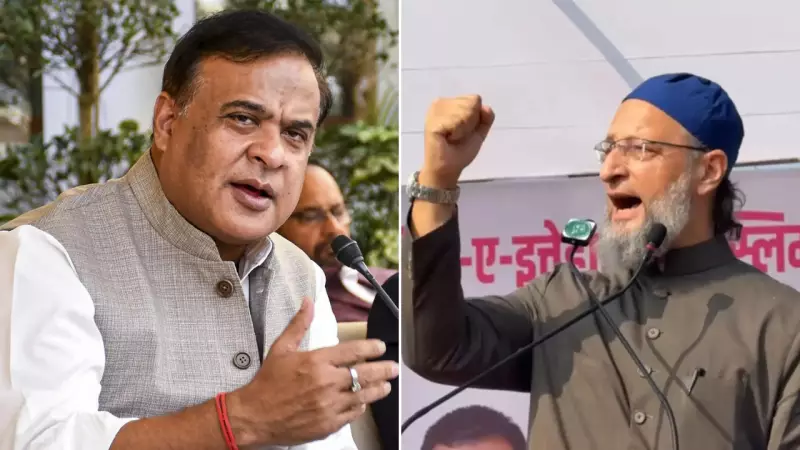
A major political controversy has erupted after Assam Chief Minister Himanta Biswa Sarma strongly countered a statement made by All India Majlis-e-Ittehadul Muslimeen (AIMIM) chief Asaduddin Owaisi regarding the possibility of a "hijab-clad" woman becoming India's Prime Minister. Sarma asserted that India is fundamentally a Hindu nation and that its Prime Minister shall always be a Hindu.
The Core of the Controversy
The row began when Asaduddin Owaisi, while highlighting the inclusive nature of the Indian Constitution, expressed his dream of seeing a daughter wearing a hijab rise to the position of Prime Minister. He contrasted India's constitutional provisions with those of Pakistan, noting that the latter restricts non-Muslims from holding top positions. "The constitution of Pakistan clearly states that a person belonging to only one religion can become the Prime Minister of the country. Baba Sahib's constitution says that any citizen of India can become Prime Minister, CM, or mayor. It is my dream that a day will come when a hijab-clad daughter will become the Prime Minister of this country," Owaisi had stated.
Sarma's Forceful Rebuttal
Responding sharply to Owaisi's remarks, Himanta Biswa Sarma acknowledged the constitutional position but emphasized India's civilizational identity. "Constitutionally, there is no bar. Anyone can become the Prime Minister. But India is a Hindu nation, Hindu civilisation, and we will always believe, and we are extremely confident that the Indian Prime Minister will always be a Hindu person," the Assam Chief Minister declared. This statement has ignited a fierce debate on secularism, majority identity, and constitutional rights.

BJP Spokesperson's Challenge to Owaisi
Adding fuel to the fire, BJP national spokesperson Shehzad Poonawala issued a pointed challenge to the AIMIM chief. He questioned Owaisi's commitment to inclusivity within his own party before making broader national statements. "Owaisi Miya, there is no restriction in the Constitution on whether the Prime Minister should be someone who wears a hijab or not. Anyone can become Prime Minister, but first, win the votes," Poonawala said.
He further challenged Owaisi, asking, "Before dreaming of becoming Prime Minister, Owaisi Miya, why don’t you first make a hijab-wearing woman, a burqa-clad woman, or at least someone from the Pasmanda community the president of your own party?" This retort directly questions the internal diversity and representation within the AIMIM's leadership structure.
Political Context and Timing
This heated exchange occurs against the backdrop of intense political campaigning for the upcoming civic elections in Mumbai. The elections are scheduled to be held on January 15, with the results set to be announced on January 16. Such polarizing statements are often seen as attempts to consolidate respective vote banks ahead of crucial polls, bringing issues of religious identity and constitutional morality to the forefront of public discourse once again.
The debate underscores the persistent tension in Indian politics between the principles of secular governance, as enshrined in the Constitution, and assertions of majoritarian civilizational identity. While leaders like Owaisi push for a broader interpretation of inclusivity, figures like Sarma anchor their vision in a perceived permanent Hindu character of the nation's highest office.