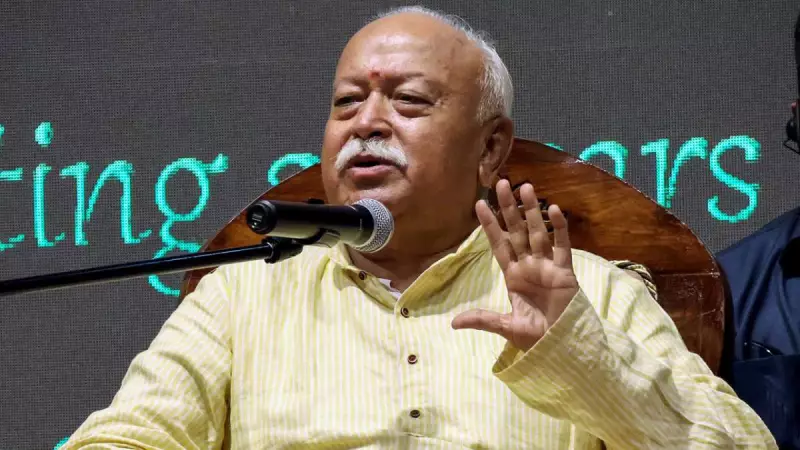
In a significant address that resonated through the halls of Bengaluru, Rashtriya Swayamsevak Sangh (RSS) chief Mohan Bhagwat delivered a powerful message about the essence of Hindu identity and its connection to national responsibility. The event, which took place on Saturday, November 8, 2025, saw the RSS leader articulate a vision where being Hindu transcends religious boundaries to encompass a deeper commitment to the nation.
The Core Message: Hindu Identity as National Duty
Mohan Bhagwat, speaking at the Bengaluru gathering, emphasized that being Hindu means being responsible for Bharat. He elaborated that this responsibility isn't merely about religious practices but involves active participation in preserving the nation's cultural heritage and maintaining social harmony. The RSS chief's words carried significant weight as he addressed hundreds of attendees who had gathered to hear his perspective on contemporary national issues.
During his speech, Bhagwat highlighted that the concept of Hindu identity extends beyond individual faith to collective national duty. He stressed that every citizen who identifies with Hindu values bears the responsibility of working toward Bharat's unity, progress, and cultural preservation. This perspective aligns with the RSS's longstanding philosophy that emphasizes the integral connection between cultural identity and national service.

Context and Significance of the Bengaluru Event
The event in Bengaluru, a city known for its technological advancement and cultural diversity, provided an important platform for the RSS chief's message. Bhagwat's appearance came at a time when discussions about national identity and cultural values are increasingly prominent in public discourse. His speech focused on constructive engagement with society rather than divisive rhetoric.
Throughout his address, the RSS leader emphasized the importance of social harmony and collective progress. He articulated that true Hindu responsibility involves working for the betterment of all communities and strengthening the nation's social fabric. This message particularly resonates in Bengaluru, which has historically been a melting pot of diverse cultures and traditions.
Broader Implications and Public Response
The RSS chief's remarks have generated significant discussion among political observers and community leaders. Many see his emphasis on responsibility rather than privilege as an important evolution in the organization's public messaging. The event in Bengaluru represents part of the RSS's ongoing efforts to engage with urban populations and articulate its vision for national development.
Bhagwat's speech avoided controversial statements and instead focused on positive engagement and national building. This approach reflects the organization's current strategy of emphasizing constructive social work and cultural preservation. The response from attendees was overwhelmingly positive, with many expressing appreciation for the clear articulation of Hindu identity as being intrinsically linked to national service.
As India continues to navigate complex social and cultural discussions, messages like those delivered by the RSS chief in Bengaluru contribute to the ongoing dialogue about national identity and collective responsibility. The emphasis on duty and service rather than division and exclusion represents a significant aspect of the current discourse surrounding Indian cultural values.