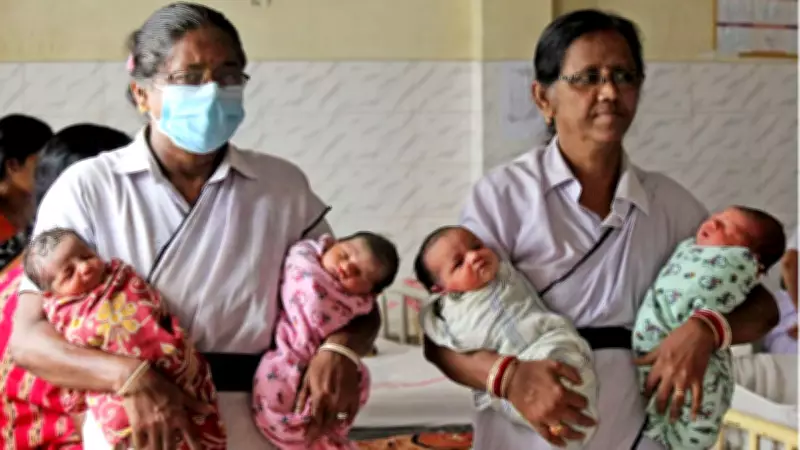
In a move to address demographic concerns, an Indian state has unveiled a unique financial incentive scheme that offers cash rewards for families having multiple children. Under this new policy, parents will receive Rs 30,000 for their third child and Rs 40,000 for their fourth child. The initiative is designed to encourage population growth in the state, which has been experiencing a declining birth rate.
Objective of the Scheme
The state government aims to counter the trend of shrinking family sizes and an aging population. By providing direct financial support, the authorities hope to ease the economic burden on families and motivate them to have more children. This scheme is part of a broader strategy to ensure a sustainable demographic balance in the region.
Eligibility and Implementation
According to official sources, the scheme will be applicable to all resident families of the state, irrespective of their income level. The cash incentive will be provided after the birth of the third and fourth child, subject to the child's health and vaccination records being up to date. The government has allocated a significant budget for this initiative and plans to implement it through the state's health and social welfare departments.

Local health workers will be responsible for identifying eligible families and facilitating the disbursement of funds. The scheme is expected to benefit thousands of families across the state, particularly in rural areas where the birth rate has seen a notable decline.
Reactions and Criticisms
The announcement has sparked mixed reactions among the public and experts. While some welcome the move as a necessary step to boost population growth, others criticize it as a short-term solution that does not address underlying issues such as the cost of raising children, education, and healthcare. Social activists have raised concerns that the scheme might lead to increased pressure on women to bear more children, potentially affecting their health and rights.
Nevertheless, the state government remains confident that the scheme will yield positive results. Officials have stated that similar models have been successful in other countries facing demographic challenges. The scheme is set to be rolled out in the coming months, with detailed guidelines to be released soon.