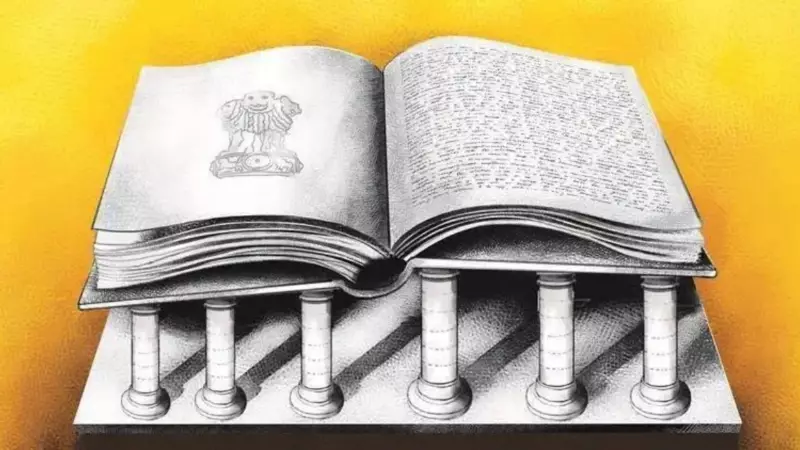
As India marks Republic Day in 2026, it serves as a poignant reminder that the Constitution is not merely a legal document confined to courtrooms but a living framework shaped by politics, government actions, and societal engagement. The erosion or protection of constitutional principles often occurs in subtle, bureaucratic ways long before judicial intervention, highlighting the critical role of broader institutions and public discourse.
The Constitution Beyond Courtrooms: A Holistic Perspective
We frequently discuss the Constitution as if it resides primarily within courts—through judgments, benches, and reported law. While judicial review remains one of the most essential safeguards, this narrow view misunderstands the Constitution's design and the dynamics of power in a modern republic. The Indian Constitution was crafted to be lived, contended with, and defended across various spheres of public life, not upheld solely on the bench.
Historical Insights and Framers' Intentions
The Constituent Assembly, a political body marked by divisive debates and acute awareness of power, embedded principles like federalism, minority protection, secularism, and social justice as hard-won compromises. B.R. Ambedkar emphasized that "constitutional morality" is not instinctive but must be cultivated within institutions, political actors, and citizens themselves. This underscores that courts alone cannot foster this culture; it requires continuous vigilance and engagement from all sectors of society.
Contemporary Challenges and Constitutional Erosion
Today, constitutional questions manifest in quieter, bureaucratic forms rather than dramatic collapses. Examples include electoral rolls being redrafted with precision, administrative detention orders that persist beyond public scrutiny, and state policies redefining equality through mundane governance actions. These events often unfold via executive notifications and political strategizing, long before writ petitions are filed, demonstrating how constitutional values can be decimated through micro-planning and selective enforcement.
Case Studies Highlighting Systemic Issues
Instances such as the prolonged imprisonment of activists like Umar Khalid without trial or the detention of voices like Sonam Wangchuk raise fundamental constitutional questions about dissent, freedom, and power dynamics. Similarly, state measures to limit land transfers on religious grounds, as seen in Assam, test ideals of equality and secularism in daily governance, not just in courtrooms. These scenarios illustrate that governance operates continuously, while courts intervene episodically, often as a belated remedy.
The Ecosystem of Constitutional Engagement
Opposition plays a constitutional function by questioning executive power, while media scrutiny sustains public legitimacy. Civil society demonstrates how laws function in practice, and academic debates elucidate norms before litigation. Together, these spaces form an ecosystem that determines whether constitutional promises endure. Insisting on apolitical engagement is misleading; the Constitution is inherently political, constructing power, constraining majorities, and protecting minorities. Neutrality in the face of power risks abdication of constitutional fidelity.
Global Context and Lessons for India
Constitutional democracies worldwide face similar tensions. In Venezuela, the hollowing out of institutional checks shows what happens when constitutional form survives without culture, while protests in Iran reveal that authority cannot be maintained by force alone. These examples remind us that constitutional erosion rarely announces itself dramatically, emphasizing the need for proactive engagement in India.
Republic Day as a Call to Action
Republic Day should transcend ritualized celebration, serving as a reminder that the republic is shaped daily by legislatures, media, government offices, courtrooms, and public debate. Constitutional responsibility does not end with adoption; it requires permanent vigilance from all citizens and institutions. By fostering a culture of constitutional morality, India can ensure its foundational promises live on, safeguarding democracy for future generations.