Ram Mandir: Faith Revival Or Political Strategy? A National Conversation
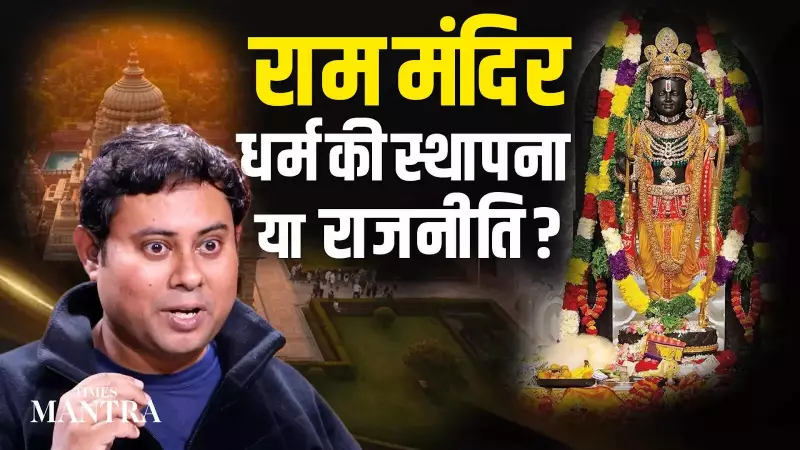
The construction of the Ram Mandir has ignited a powerful national discussion in India. This debate touches on deep questions of faith, identity, and political power. For countless devotees, the temple represents a profound spiritual revival. They see it as a long-awaited civilizational moment, firmly rooted in belief and historical tradition.
A Symbol of Devotion and a Mirror to Politics
Many Indians view the Ram Mandir primarily as a sacred symbol. It fulfills a spiritual yearning that has persisted for generations. The temple's completion marks a significant religious milestone for the Hindu community. Devotees celebrate it as a restoration of cultural and religious heritage.
However, the project also raises critical questions for other observers. They scrutinize the role of religion in India's electoral politics and state power. The timing and promotion of the temple inevitably intertwine with political narratives. This dual nature makes the Ram Mandir a complex national phenomenon.

Beyond Simple Binaries: Sacred and Secular in Public Life
As writer and thinker Hindol Sengupta frequently notes, India's public life resists simple categorization. The lines between the sacred and the secular are often blurred and interconnected. The Ram Mandir perfectly illustrates this reality. It stands simultaneously as a symbol of deep devotion and a reflection of contemporary political strategies.
The ongoing debate reflects India's broader societal effort. The nation continuously strives to balance faith, democratic principles, and pluralism. This is not a new challenge, but the Ram Mandir has brought it into sharp, contemporary focus.
The Core of the Debate: Belief and Power
Is the Ram Mandir a genuine spiritual resurgence? Or is it a calculated political maneuver? The answer likely lies somewhere in the middle, acknowledging both perspectives. For supporters, it is a triumph of faith and identity. For critics, it raises concerns about the merging of religious symbolism with state authority.
This national conversation is crucial for India's future. It forces a re-examination of what it means to be a modern, democratic nation with ancient spiritual roots. The Ram Mandir, therefore, is more than just a building. It is a powerful catalyst for discussing India's soul and its political direction.