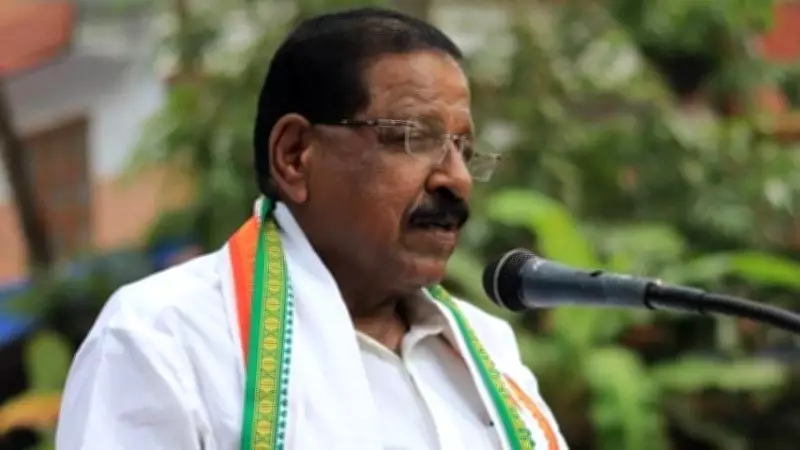
Rajmohan Unnithan, a senior Congress leader, has formally expressed his interest in the post of Kerala Pradesh Congress Committee (KPCC) president, urging the party leadership to prioritize merit over caste considerations in the selection process.
Letter to Top Party Leadership
Unnithan confirmed that he sent a letter to Congress president Mallikarjun Kharge, Leader of Opposition in the Lok Sabha Rahul Gandhi, and All India Congress Committee (AICC) general secretary K C Venugopal, outlining his candidacy and vision for the state unit.
In his communication, Unnithan emphasized the need for a performance-driven approach, arguing that the party's revival in Kerala depends on selecting leaders based on capability rather than traditional caste equations. He stated that the Congress must move away from identity politics to regain public trust.

Background and Context
The KPCC president position is currently held by K Sudhakaran, whose term is set to expire soon. The Congress high command is expected to announce a new appointment in the coming weeks, with several names under consideration. Unnithan's bid adds to the internal dynamics as the party prepares for upcoming local body elections and the 2026 Kerala assembly polls.
Unnithan, a former Union minister and noted author, has been a vocal critic of the current party structure in Kerala. He has previously advocated for organizational reforms and youth induction. His latest move signals a push for change within the state unit, which has faced electoral setbacks against the ruling Left Democratic Front.
Reactions and Implications
While the Congress leadership has not officially responded, party insiders suggest that Unnithan's appeal for merit-based selection may resonate with the central leadership's reform agenda. However, caste equations remain a sensitive factor in Kerala politics, where communities like the Ezhava, Nair, and Christian groups play significant roles in electoral outcomes.
Unnithan's candidature could challenge the existing power balance, potentially leading to a contest between traditional factionalism and a new wave of leadership. The final decision rests with the Congress president, who will consult state leaders before making an appointment.