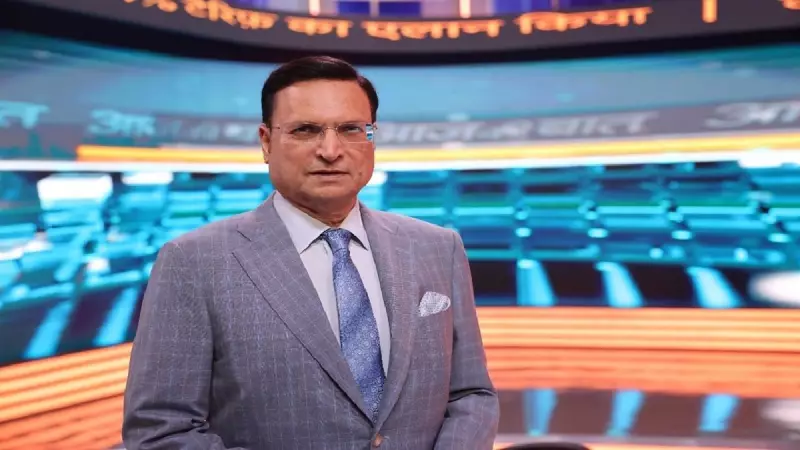
In a powerful and timely commentary, veteran journalist and editor-in-chief of India TV, Rajat Sharma, has issued a clarion call to the nation to put an immediate stop to hate crimes. Through his influential opinion piece titled 'Aaj Ki Baat,' published on December 30, 2025, Sharma leverages his platform to address a critical societal issue, urging for unity, legal accountability, and a collective moral stand.
The Core Message: A Nation at a Crossroads
Rajat Sharma's blog post is not merely an observation but a direct appeal to the conscience of the country. He articulates a deep concern over the rising incidents of hate-motivated violence that threaten the fundamental fabric of Indian society. Sharma emphasizes that such acts of prejudice and aggression, often fueled by communal or religious biases, are antithetical to India's long-cherished ethos of 'Unity in Diversity.'
His argument is built on the premise that for India to progress as a global leader and a harmonious society, it must first ensure the safety and dignity of every citizen, regardless of their background. The piece serves as a reminder that the rule of law must be paramount, and any transgression, especially those driven by hate, must be met with swift and unequivocal legal consequences.

The Role of Leadership and Civil Society
Sharma's commentary extends beyond identifying the problem to proposing a pathway for resolution. He underscores the critical responsibility of political leaders, community elders, and social influencers in setting the right tone. According to him, leadership at every level must actively discourage divisive rhetoric and promote messages of peace and coexistence.
Furthermore, the article highlights the pivotal role of civil society, the media, and the common citizen. Sharma calls for a collective awakening where people reject hate speech and violence in their neighborhoods and social circles. He advocates for a proactive stance where citizens become stakeholders in preserving social harmony, reporting incidents, and supporting the victims.
Legal Framework and Enforcement
A significant portion of Sharma's appeal focuses on the machinery of justice. He stresses that existing laws must be enforced rigorously and without bias to deter potential perpetrators. The opinion piece suggests that law enforcement agencies need to be particularly vigilant and sensitive in handling cases that have the potential to ignite communal tensions.
Sharma implies that justice delayed in such sensitive cases can be perceived as justice denied, eroding public trust in institutions. Therefore, his call to action includes a demand for efficient investigation and prosecution to ensure that hate crimes do not go unpunished, thereby reinforcing the state's commitment to protecting all its people.
The Larger Implication: India's Image and Future
Rajat Sharma concludes his 'Aaj Ki Baat' by linking internal social harmony to India's standing on the world stage. He posits that a nation riddled with internal strife and prejudice cannot achieve its true potential or command global respect. The fight against hate crimes is, therefore, not just a domestic issue but a prerequisite for national prosperity and international reputation.
His blog post, dated December 30, 2025, stands as a documented plea from a respected media personality. It encapsulates a moment of reflection, urging the country to choose a path of tolerance and solidarity over division and hatred. The message is clear: stopping hate crimes is the duty of every Indian to safeguard the nation's future.
In essence, Rajat Sharma has transformed his regular editorial space into a platform for urgent social counsel. By doing so, he reinforces the role of responsible journalism in nation-building, moving beyond reporting to advocating for a core constitutional value—the right to life with dignity for all.