Rahul Gandhi Criticizes BJP and RSS for Centralizing Power in Kochi Address
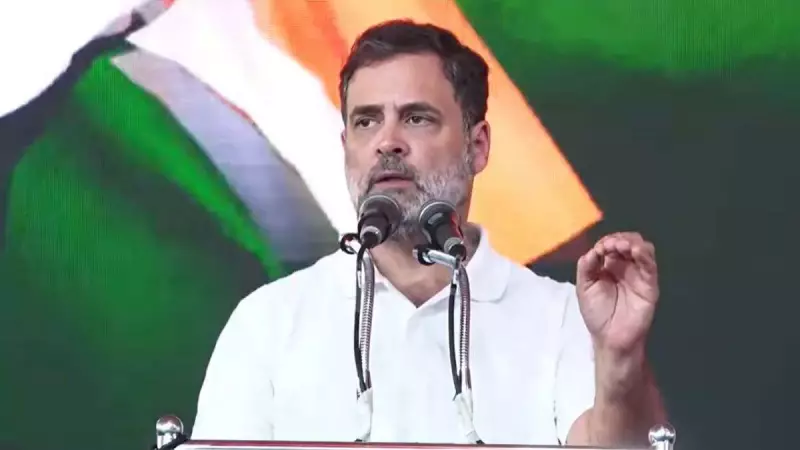
Congress leader Rahul Gandhi delivered a sharp critique of the Bharatiya Janata Party and the Rashtriya Swayamsevak Sangh during a public speech in Kochi, Kerala. He accused these organizations of actively working towards the centralization of power in India. Gandhi emphasized that this approach starkly contrasts with the Congress party's long-standing commitment to decentralization.
Key Points from Rahul Gandhi's Speech
Rahul Gandhi spoke to a gathered crowd in Kochi, outlining his concerns about the current political direction. He stated that the BJP and RSS are pushing for a model where power becomes concentrated at the center. This, he argued, undermines the principles of federalism and local governance that are crucial for a diverse country like India.
Gandhi highlighted that the Congress party believes in distributing power more evenly across states and local bodies. He pointed out that decentralization allows for better representation and more effective administration. The Congress leader stressed that this philosophy is essential for addressing the unique needs of different regions, including Kerala.

Contrasting Political Philosophies
The speech clearly drew a line between two opposing views on governance. On one side, Gandhi portrayed the BJP and RSS as favoring a top-down approach. He suggested this could lead to reduced autonomy for states and local communities. On the other side, he presented Congress as advocating for a bottom-up model that empowers local governments.
Rahul Gandhi's remarks in Kochi are part of his ongoing efforts to rally support in Kerala, a state where Congress has a significant presence. His comments aim to resonate with voters who value regional autonomy and decentralized decision-making. The timing of this speech is notable as it comes amid broader political debates about federal structure in India.
Implications for Kerala and Beyond
By making these statements in Kochi, Gandhi directly addressed the people of Kerala. He implied that a centralized power structure could negatively impact the state's ability to manage its own affairs. Kerala has often prided itself on its distinct social and political landscape, which might be at odds with a highly centralized system.
Political analysts view this speech as a strategic move to differentiate Congress from the ruling BJP ahead of future elections. Gandhi's focus on decentralization taps into concerns about overreach by the central government. It also reinforces Congress's platform as a defender of states' rights and local governance.
The response from BJP and RSS representatives to these allegations is expected to be strong. They have previously defended their policies as necessary for national unity and development. This exchange highlights the deepening ideological divide between India's major political parties.
Rahul Gandhi's Kochi address underscores a fundamental debate in Indian politics. The choice between centralization and decentralization will likely remain a key issue in upcoming electoral battles. For now, Gandhi has made his party's position clear, positioning Congress as the champion of distributed power and local empowerment.