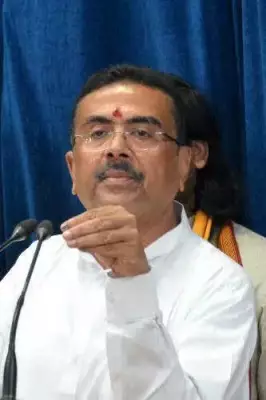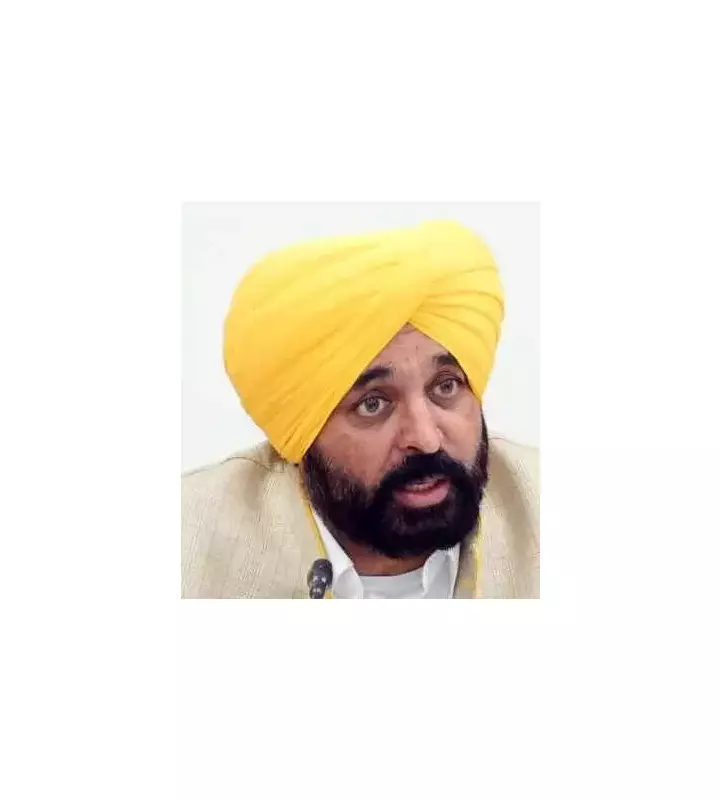
Punjab Chief Minister Bhagwant Mann formally registered his strong opposition to The Seeds Bill, 2025 during a crucial meeting with Union Home Minister Amit Shah on Saturday. The meeting took place in New Delhi, where Mann presented detailed arguments against the proposed legislation.
Protecting Traditional Farming Practices
Mann argued passionately that the draft legislation poses a significant threat to traditional farming practices that have sustained Punjab's agricultural community for generations. He emphasized that the bill appears to favor private companies over the interests of farmers who have historically managed their own seed systems.
The chief minister specifically urged the central government not to table the bill in Parliament in its current form. He expressed deep concern that forcing farmers to depend exclusively on private companies for seeds would undermine their fundamental right to retain and store seeds for future planting seasons.

Key Concerns Raised by Punjab CM
Mann highlighted several critical issues with the proposed legislation during his discussion with the home minister:
- Representation Concerns: The bill's proposed "zone-based" system fails to guarantee Punjab's representation on the central seed committee, unlike the existing framework that ensures the state's voice in seed-related decisions.
- State Powers Curtailed: The legislation significantly reduces the powers of state-level bodies in the seed registration process, with no clear role envisioned for state seed committees.
- Compensation Framework Missing: The draft bill remains completely silent on establishing a compensation framework for farmers who suffer crop losses due to seed failure, leaving agricultural families vulnerable.
- Untested Foreign Seeds: Mann flagged serious risks posed by provisions allowing import and sale of seed varieties tested in foreign countries without mandatory multi-location testing under India's specific agro-climatic conditions.
Traditional Seed Storage Under Threat
"In Punjab's farm households, there has traditionally been a practice of saving seeds for the next crop," Mann explained during the meeting. "This has always served as a natural storage system that supports our agricultural cycle. If companies dictate that seeds must be procured only from them, it will not be right for our farmers."
The chief minister made his position clear to the home minister, stating directly, "I told the home minister that the Seeds Bill should not be tabled in Parliament." According to Mann, Amit Shah responded by assuring him that the concerns raised would be examined carefully before any decision is made.
Punjab's Agricultural Significance Ignored
Mann pointed out the apparent contradiction in the legislation's approach. Despite Punjab being among India's largest grain-producing states, the draft bill does not assure adequate representation for the state as provided under the current framework.
"The zone-based system introduced in the bill does not guarantee Punjab's representation in the central seed committee," Mann emphasized. "This limitation effectively reduces the state's voice in decisions that directly affect our seed sector and agricultural future."
Immediate Implications for Farmers
The chief minister expressed particular concern about the practical implications for Punjab's farming community. He noted that the bill's provisions could disrupt established agricultural patterns that have proven successful for decades.
Mann further explained that without proper safeguards, farmers face increased vulnerability. The absence of compensation mechanisms for seed failure and the potential introduction of untested foreign seed varieties create substantial risks for agricultural productivity and farmer livelihoods.
The Seeds Bill, 2025 is likely to be tabled during the upcoming budget session of Parliament, making these discussions particularly timely and significant for agricultural policy formulation.