Punjab AAP Government Fulfills Key Poll Promise with Women's Allowance in Budget
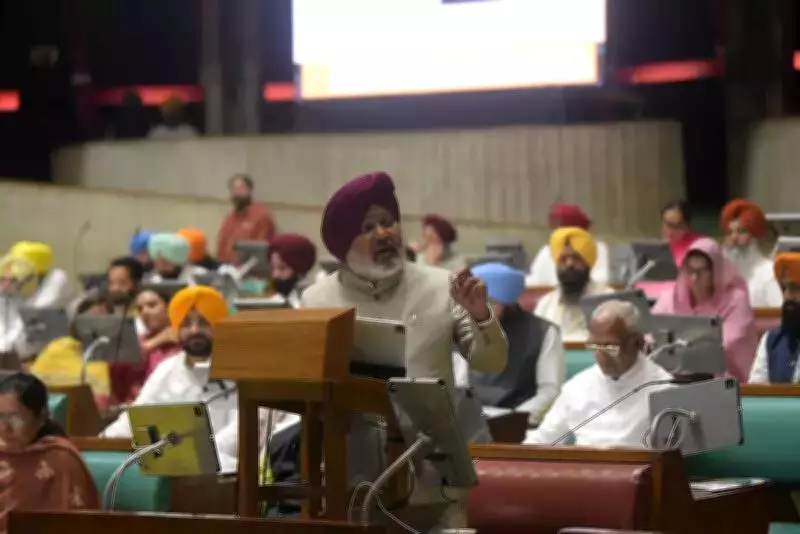
In a significant move timed with International Women's Day, the Bhagwant Mann-led Aam Aadmi Party (AAP) government in Punjab has delivered on a long-awaited pre-poll guarantee by introducing a monthly financial allowance for eligible adult women. The announcement came as part of the state's 2026-27 budget, presented by Finance Minister Harpal Singh Cheema on Sunday, marking the first time in Punjab Vidhan Sabha history that a budget was tabled on a weekend.
Details of the Mukh Mantri Mawan Dhian Satikar Yojna
The centerpiece of the budget, titled 'Saari Guarantiyan Puri Karan Wala Budget', is the 'Mukh Mantri Mawan Dhian Satikar Yojna'. This scheme provides a monthly stipend of Rs 1,000 to eligible adult women, with those from the Scheduled Caste community receiving Rs 1,500. The state government will transfer the funds directly into the beneficiaries' bank accounts, with registration set to commence on Baisakhi, April 13.
An allocation of Rs 9,300 crore has been earmarked for the initiative, targeting coverage of approximately 97% of women in Punjab. Notably, women already receiving social security pensions—such as old-age, widow, or disability pensions—will also qualify for this additional benefit. However, the scheme excludes income-tax payees, current or former permanent government employees, and sitting or past MPs and MLAs.

Budget Highlights and Financial Projections
The total budget outlay stands at Rs 2,60,437 crore, with no new taxes proposed. Finance Minister Cheema emphasized that the budget is "dedicated to the mothers and daughters of Punjab," asserting that every pre-poll promise has now been fulfilled. This budget is the AAP government's fifth since assuming office nearly four years ago.
Despite the welfare push, Punjab's debt continues to rise. The total outstanding debt is projected to reach Rs 4,47,754 crore by March 31, 2027, up from a revised estimate of Rs 4,07,784 crore for the current year. The effective revenue deficit is forecast at 2.06% of Gross State Domestic Product (GSDP), with a fiscal deficit of 4.08%.
Economic Growth and Sectoral Allocations
Cheema highlighted Punjab's economic resilience, projecting a 10% GSDP growth for FY 2026-27, with GSDP estimated to reach Rs 9,80,635 crore. This growth is supported by improved agricultural productivity, expanding services, and strengthened industrial momentum. The debt-to-GSDP ratio has reportedly decreased from 48.2% in March 2022 to 44.4% as of January 31, 2026.
Key sectoral allocations include:
- Education: Rs 19,279 crore, a 7% increase from the previous year.
- Healthcare: Rs 6,879 crore, marking a 23% hike, including Rs 2,000 crore for the Mukhya Mantri Sehat Yojna and funds for 143 new Aam Aadmi Clinics.
- Internal Security: Rs 11,577 crore, with Rs 100 crore dedicated to a socio-economic census on drugs.
- Power Subsidy: Scaled down to Rs 15,550 crore from Rs 20,500 crore, following a recent tariff cut, while maintaining free domestic power up to 300 units and free agricultural electricity.
Political Context and Comparisons
Cheema took a veiled swipe at BJP-ruled Haryana's Deen Dayal Lado Lakshmi Yojna, criticizing schemes that limit benefits to a small section of women. He stated, "Many states have started the 'jumla' of announcing similar schemes, but they limit it only to a small section of women... Punjab will not do such 'jumlas' as Bhagwant Mann is not the chief minister for 20% women of Punjab, but for all women of Punjab."
Chief Minister Bhagwant Mann described the allowance as a major step toward strengthening women's financial independence, linking it to other welfare measures like free bus travel, free power, and cashless healthcare. The announcement was met with loud thumping of desks by treasury benches, with many women AAP functionaries and volunteers present in the House.
Cheema also noted that capital expenditure under the AAP government has reached Rs 32,353 crore over the past four years, more than double that of the previous administration, signaling a shift toward investment-driven growth.