In a significant development highlighting shifting dynamics within the Indian National Congress, Priyanka Gandhi Vadra emerged as the key strategist behind the party's upcoming nationwide agitation to protect the rural job guarantee scheme, despite her notable absence from a crucial high-level meeting.
The Strategic Absence and the Action Plan
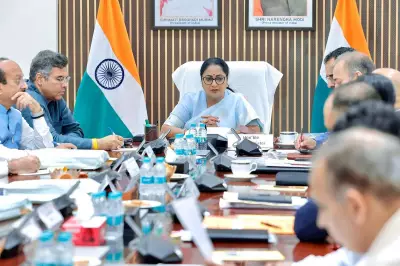
When the Congress Working Committee (CWC), the party's apex decision-making body, gathered in Delhi last weekend, one prominent leader was missing: Priyanka Gandhi Vadra. The agenda was critical – formulating a response to the government's move to replace the Mahatma Gandhi National Rural Employment Guarantee Act (MGNREGA) with the new VB-G RAM G Act.
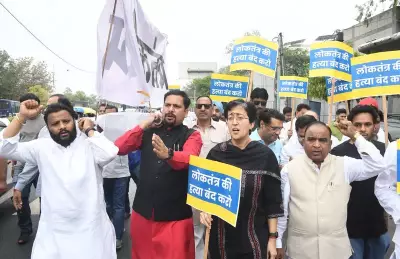
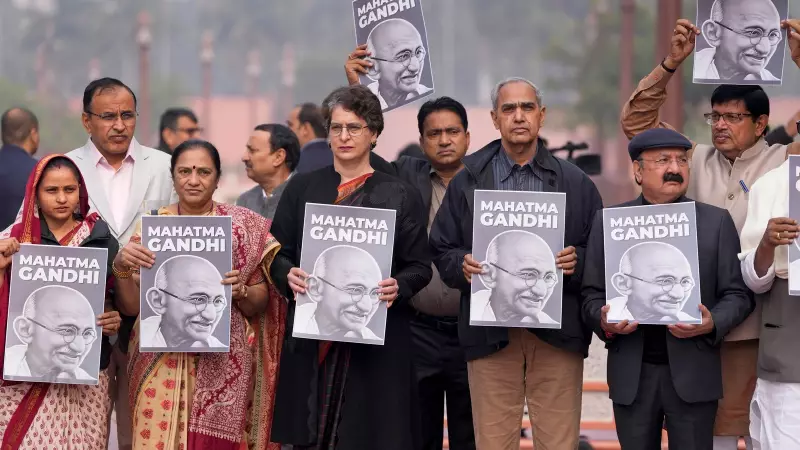
However, the CWC was informed that Priyanka Gandhi, the All India Congress Committee (AICC) general secretary and MP from Wayanad, had already drawn up the blueprint for an agitational programme. The committee subsequently approved her plan, giving the green light for a nationwide "MGNREGA Bachao" (Save MGNREGA) protest set to launch on January 5. The protest demands the repeal of the new law that replaced the UPA-era scheme, originally conceptualized by the Sonia Gandhi-chaired National Advisory Council (NAC).

A CWC member revealed to The Indian Express that Priyanka is being seen as the "architect of the MGNREGA Bachao Abhiyan," a clear signal of her increasing involvement in steering party strategy.
Parliament Prowess Fuels Leadership Buzz
Priyanka Gandhi's rising profile is not solely based on backroom strategy. Her recent performances in Parliament have generated considerable attention and internal discussion. Key moments include her speech during the Vande Mataram debate, her address on the VB-G RAM G Bill, a light-hearted exchange and subsequent meeting with Union Transport Minister Nitin Gadkari about her constituency, and a shared joke with Prime Minister Narendra Modi at the Speaker's tea.
Her Vande Mataram speech, where she alleged the debate was a government ploy to set the agenda for West Bengal elections, reportedly struck a nerve. Sources indicate PM Modi took exception to her criticism during an NDA parliamentary party meeting.
Within the Congress, her oratory is being closely watched and contrasted with that of her brother, Leader of Opposition Rahul Gandhi. Party members have noted her effective body language, quick thinking, pointed attacks, and a delivery laced with humour rather than acerbity. One functionary called it a "refreshing change," while another cautioned against comparing the siblings' distinct styles.
Rahul Gandhi himself praised her speech at a meeting of Lok Sabha MPs, acknowledging the positive feedback about its impact. Priyanka reciprocated by applauding her brother's speech on electoral reforms.
A Political Journey Marked by Highs and Lows
Priyanka Gandhi's formal entry into active politics ahead of the 2019 Lok Sabha elections was hailed as a potential game-changer for the Congress. However, the party faced a severe defeat in the wake of the Pulwama and Balakot events. As the party's in-charge for eastern Uttar Pradesh then, she could not prevent a drubbing, with the Congress winning only Sonia Gandhi's Rae Bareli seat.
Her role was expanded to cover the entire state for the 2022 Assembly elections. Despite a spirited campaign with a women-centric pitch – "Ladki hoon, Lad sakti hoon" – the party managed to win just two out of 403 seats. Following this setback, she stepped back from UP affairs, which subsequently suffered from organisational weakness.
Her political pivot southwards came after the 2024 Lok Sabha polls, when she contested and won from Wayanad, a seat vacated by her brother who chose to retain Rae Bareli. Today, as the only AICC general secretary without assigned responsibilities, her recent actions and impactful parliamentary presence are fuelling a growing consensus that she should be accorded a far more prominent and defined role within the party hierarchy.