President's Office Declines Trinamool Congress Meeting Request Citing Time Constraints
The office of President Droupadi Murmu has once again declined a formal request from the Trinamool Congress (TMC) for a meeting, citing a 'paucity of time' as the primary reason. This marks the second instance where the party's attempt to engage with the highest constitutional authority has been turned down due to scheduling issues.
Background of the Meeting Request
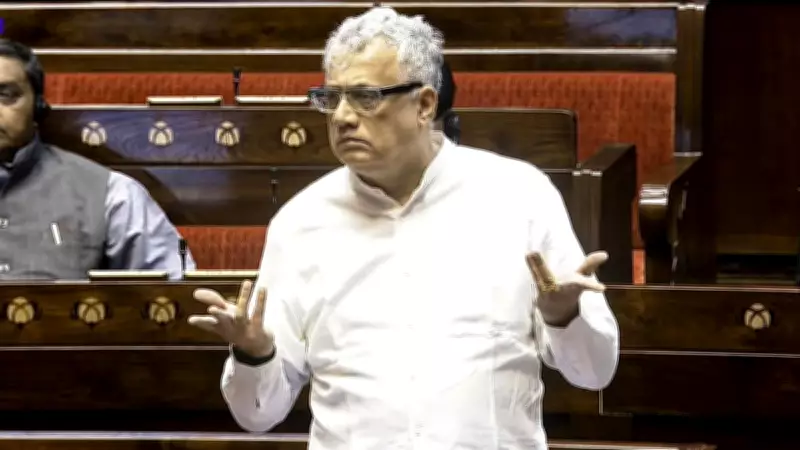
The initial request was made by Derek O'Brien, the Trinamool Congress' floor leader in the Rajya Sabha, who wrote a letter to President Murmu on March 9, 2026. In his correspondence, O'Brien sought an appointment for a party delegation to meet with the President, aiming to discuss various political and governance matters of national importance.
Despite this early outreach, the President's office responded by declining the meeting, emphasizing that time constraints prevented the scheduling of such an engagement. This development has sparked discussions within political circles regarding the accessibility and priorities of the presidential office during this period.

Political Implications and Reactions
The refusal to grant a meeting to the Trinamool Congress, a major opposition party in India, carries significant political weight. It highlights the ongoing dynamics between the ruling Bharatiya Janata Party (BJP) and opposition factions, particularly in the context of parliamentary proceedings and national discourse.
Key points to consider include:
- The timing of the request, which came in early March, suggests the TMC's intent to address pressing issues ahead of potential legislative sessions.
- The repeated decline underscores the challenges opposition parties may face in securing high-level governmental engagements.
- This incident may influence future interactions between the President's office and other political entities, setting a precedent for how such requests are handled.
Analysis of the 'Paucity of Time' Justification
The cited reason of 'paucity of time' raises questions about the operational demands on the President's schedule. As the ceremonial head of state, President Murmu's calendar is often packed with official duties, state functions, and diplomatic engagements, which could legitimately limit availability for political meetings.
However, critics argue that this justification might reflect broader political strategies or priorities, especially given the TMC's status as a vocal opposition party. The situation invites scrutiny into how the presidential office balances its constitutional roles with the political landscape of India.
Future Prospects and Broader Context
Looking ahead, the Trinamool Congress may need to reassess its approach to engaging with the President's office, potentially exploring alternative channels or timing for such requests. This episode also ties into larger narratives about Indian politics, including:
- The role of the President in mediating or engaging with opposition parties.
- The evolving relationship between the central government and regional political forces like the TMC.
- The impact of such refusals on democratic dialogue and governance in India.
As of the latest updates in March 2026, there has been no indication of a rescheduled meeting, leaving the TMC's concerns unaddressed through this particular avenue. Observers will be watching closely for any shifts in policy or future interactions that might emerge from this standoff.