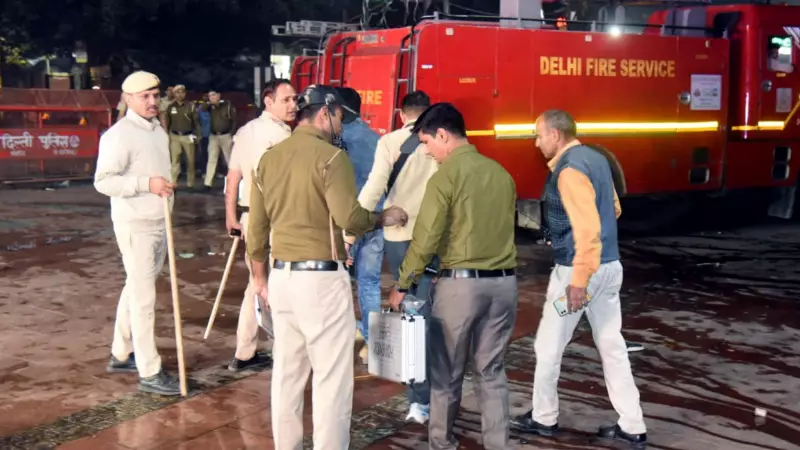
A recent court verdict in Delhi concerning the 2005 Red Fort blast case has ignited strong political reactions across party lines, with prominent leaders including Rahul Gandhi and Arvind Kejriwal weighing in on the judicial outcome.
The Court Verdict and Conviction
A Delhi court convicted Lakhvir Singh, alleged to be a member of the pro-Khalistan terrorist organization Lashkar-e-Taiba, for his involvement in the December 2005 explosion at the historic Red Fort monument. The blast, which occurred on December 22, 2005, resulted in the tragic death of two civilians and one personnel from the Central Industrial Security Force (CISF). The court found Singh guilty under various sections of the anti-terror law Prevention of Terrorism Act (POTA), the Explosive Substances Act, and the Indian Penal Code.
The legal proceedings revealed that Singh was accused of planting an explosive device near the Diwan-e-Am structure within the Red Fort complex. The prosecution successfully argued that he was an active member of LeT and had received training in Pakistan. The court has scheduled the hearing for arguments on the quantum of sentence for October 27, 2023.

Political Leaders Voice Their Opinions
The verdict quickly became a talking point in political circles. Congress leader Rahul Gandhi took to social media platform X (formerly Twitter) to express his views. Gandhi stated that the blast was an attack on India's unity and sovereignty, emphasizing the symbolic importance of the Red Fort as a representation of the country's diversity and composite culture.
Delhi Chief Minister Arvind Kejriwal also responded to the development, calling the blast a cowardly act aimed at destabilizing the nation. Kejriwal commended the efforts of the Delhi Police and the judicial system for ensuring justice was served after nearly eighteen years since the incident occurred.
Broader Implications and National Security
This case has reignited discussions about national security and the handling of terrorism-related cases in India. The conviction serves as a reminder of the persistent threats faced by the nation from extremist groups. The involvement of a cross-border terrorist organization has highlighted ongoing security challenges that require continuous vigilance and robust counter-terrorism mechanisms.
Political analysts suggest that such verdicts often become focal points for political discourse, especially as they relate to national security policies and the government's effectiveness in combating terrorism. The reactions from various political figures reflect their respective party stances on security matters and their attempts to connect with public sentiment regarding national safety.
As the nation awaits the final sentencing, this case continues to underscore the importance of judicial perseverance in terrorism cases and the complex interplay between legal outcomes and political commentary in India's democratic landscape.