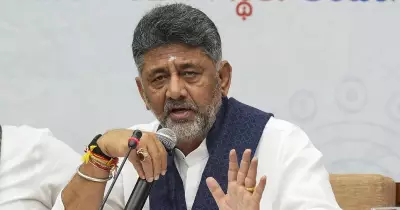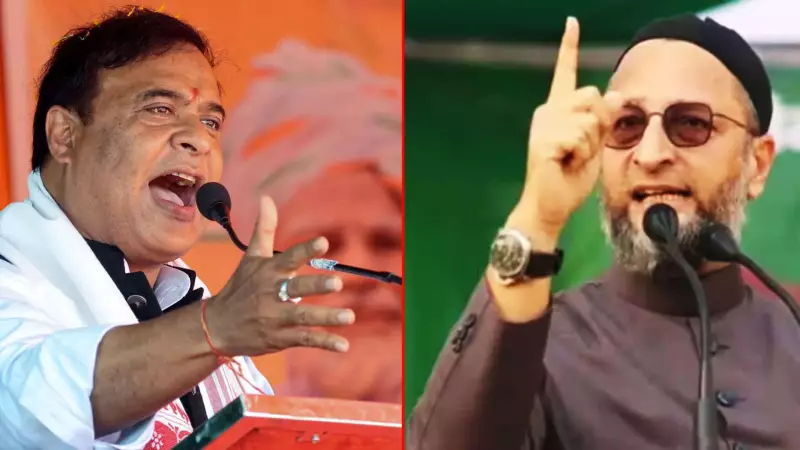
A major political controversy has ignited after Assam Chief Minister Himanta Biswa Sarma stated that India would always have a Hindu Prime Minister. The remark, made on January 11, 2026, prompted a sharp retort from All India Majlis-e-Ittehadul Muslimeen (AIMIM) president Asaduddin Owaisi, who accused Sarma of having a "tubelight" mindset that misunderstands the nation's constitutional ethos.
The Spark: Sarma's Assertion and Owaisi's Constitutional Counter
While acknowledging India's constitutional openness, Himanta Biswa Sarma asserted that the country's Prime Minister would invariably be a Hindu. This view was immediately challenged by Asaduddin Owaisi, who argued it reflected a narrow interpretation of India's foundational principles. Citing Dr. B.R. Ambedkar, Owaisi emphasized that the Indian Constitution places no religious bar on holding the highest office.
Owaisi drew a pointed comparison with Pakistan, where constitutional provisions restrict the top post based on faith. He reiterated his longstanding position that India's secular democracy could one day see a hijab-clad woman become Prime Minister, a statement he has made previously to underline the nation's inclusive potential.

BJP's Strong Objection and the Exchange Escalates
The Bharatiya Janata Party (BJP) swiftly entered the fray, strongly objecting to Owaisi's comments. Party spokesperson Shehzad Poonawalla countered that the Constitution indeed imposes no restrictions based on religion or attire. He turned the focus on Owaisi, questioning his commitment to representation within his own political party and accusing him of divisive rhetoric.
This exchange has intensified the ongoing debate about secularism, representation, and the interpretation of constitutional values in Indian politics. The row highlights the deep ideological divides that continue to shape political discourse in the country.
Broader Implications and Political Fallout
The controversy extends beyond a mere war of words. It touches upon core questions about national identity and the practical application of secularism in India's political life. Sarma's comment and Owaisi's reaction, followed by the BJP's rebuttal, have sparked widespread discussion on social media and news platforms.
Analysts suggest such debates are likely to intensify as political positioning continues ahead of future electoral cycles. The core argument revolves around whether India's leadership is defined by its constitutional openness or by its majoritarian cultural identity, a tension that remains at the heart of many contemporary political clashes.