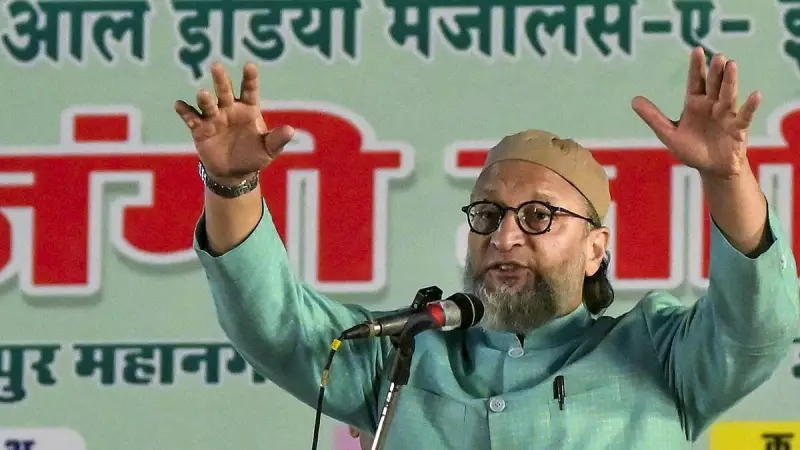
In a statement that has ignited a fresh political controversy, All India Majlis-e-Ittehadul Muslimeen (AIMIM) chief and Hyderabad MP Asaduddin Owaisi declared that India will one day see a woman wearing a hijab become the Prime Minister. His prediction, made on January 10, 2026, was swiftly met with sharp criticism from the ruling Bharatiya Janata Party (BJP), which labeled the remark as 'irresponsible'.
The Controversial Prediction and Immediate Backlash
Asaduddin Owaisi, known for his forthright views, made the comment during a public address. He expressed his firm belief in the democratic future of the nation, where leadership would transcend traditional barriers. The core of his statement was a vision of inclusivity, suggesting that a Muslim woman who chooses to wear the hijab could ascend to the country's highest executive office.
However, the reaction from the BJP was immediate and severe. Party representatives accused the Hyderabad MP of presenting half-truths and being deliberately provocative. The BJP's counter-argument centered on the claim that a significant number of Muslim women themselves are opposed to the practice of wearing the hijab. They asserted that Owaisi's comment ignored this internal dissent within the community and was made without a sense of responsibility.

Unpacking the Political Debate
This exchange is not an isolated incident but part of a longer, ongoing national conversation about religious identity, women's rights, and political representation. The hijab has been a potent and polarizing symbol in Indian politics and society in recent years. Owaisi's statement is seen by his supporters as an aspirational claim for greater minority representation at the pinnacle of power.
Conversely, the BJP's rebuttal aligns with its position on issues of uniform civil code and gender justice, often arguing that certain religious practices need reform from within. The party positioned its response as a defense of those Muslim women who, it claims, seek liberation from mandatory religious dress codes.
Broader Implications and Reactions
The swift political fallout highlights the sensitive intersection of faith, gender, and governance in contemporary India. Such statements and their subsequent condemnations often resonate far beyond political circles, influencing social discourse and community sentiments. Analysts suggest that this episode will further energize debates on secularism, representation, and the political mobilization of identity.
While Owaisi's remark paints a picture of a future India with expanded horizons of leadership, the BJP's firm dismissal underscores the deep ideological divides that characterize the current political landscape. The incident ensures that the question of religious symbolism in public and political life will remain a fiercely contested topic as the nation moves forward.