Operation Sindoor: India's Pivot to Integrated, Data-Driven Warfare
India's military strategy is undergoing a profound and silent transformation, moving decisively from traditional service-led operations to a sophisticated model centered on seamless integration across multiple domains, data analytics, and rapid decision-making cycles. This strategic evolution was highlighted by Army Chief General Upendra Dwivedi during his address at the Ran Samwad 2.0 forum, where he pointed to Operation Sindoor as a concrete example of this new paradigm in action.
A New Model of Warfare
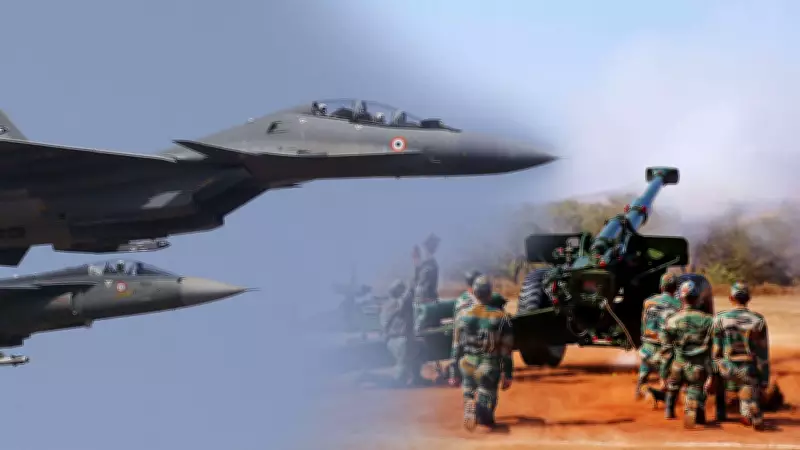
Operation Sindoor vividly demonstrates that contemporary warfare is no longer defined by the isolated actions of individual military branches. Instead, success hinges on the real-time fusion of diverse capabilities. During this operation, ground intelligence was meticulously integrated with cyber inputs and electronic warfare data, creating a comprehensive operational picture. This information fed directly into a highly coordinated Army-Air Force strike cycle, while strategic naval positioning influenced the broader geopolitical environment, showcasing a holistic approach to conflict.
The primary focus shifted from mere firepower to the critical metrics of speed and accuracy in information flow across interconnected systems. This reflects a fundamental change in the very nature of conflict, where the modern battlefield is inherently multi-layered, simultaneously spanning the physical domains of land, sea, and air, alongside the intangible realms of cyberspace, outer space, and the electromagnetic spectrum.

Enabling Factors and Emerging Challenges
This deep integration enables military forces to execute operations with unprecedented speed and precision, creating significant tactical advantages. However, it also introduces a complex array of new challenges that must be navigated. These include intricate coordination issues between different service branches, the growing complexity of identifying and countering drone threats, and persistent problems with signal interference in contested electromagnetic environments.
The required shift extends far beyond technology; it demands a fundamental organizational and cultural transformation within the armed forces. This new model necessitates decentralized decision-making authority to maintain operational tempo and requires the development of a new breed of cross-domain military leadership capable of understanding and commanding integrated operations.
Glimpsing the Future of Conflict
Operation Sindoor offers a compelling glimpse into the future of Indian military operations—a future where wars are won not solely by numerical strength or firepower, but by superior speed, seamless connectivity, and flawless coordination across all domains of warfare. This data-driven, integrated approach represents a critical step in modernizing India's defense capabilities to meet the complex security challenges of the 21st century.