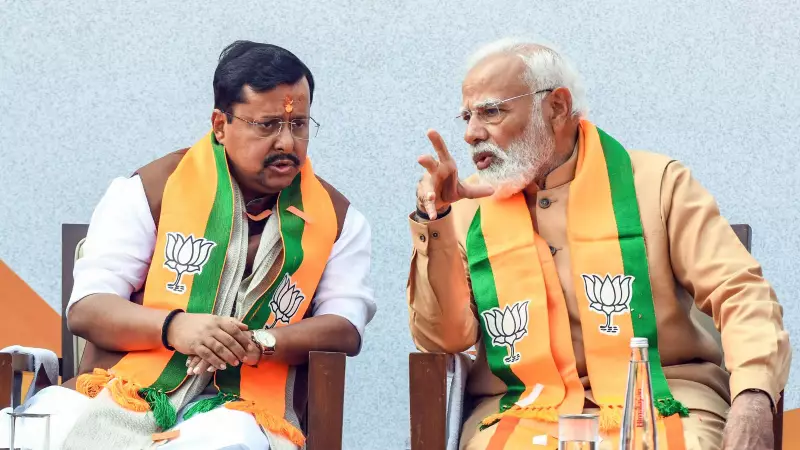
Nitin Nabin's Presidency: BJP's Millennial Facade or Substantive Shift?
The Bharatiya Janata Party's appointment of Nitin Nabin as its president at just 45 years old has been widely portrayed as a generational shift in India's dominant political force. This move follows a pattern of relatively unknown leaders being elevated to prominent positions, similar to recent chief ministers in Gujarat, Rajasthan, and earlier Haryana. However, the crucial question remains: does this represent genuine transformation or merely cosmetic change in a party whose fundamental politics continues to be shaped by established power structures?
Historical Context of Generational Shifts in Indian Politics
India has witnessed several significant generational transitions throughout its political history, each bringing distinct changes to the political landscape. During the independence movement, Jawaharlal Nehru and Subhas Chandra Bose emerged as young leaders who fundamentally transformed the Congress party's approach from seeking limited concessions to demanding complete independence from British rule.
From the late 1950s through the 1970s, another wave of young leaders including Ram Manohar Lohia, various socialist figures, emerging communist leaders, and Jana Sangh representatives reshaped national politics through ideological diversity and organizational splits. The contrast between Lalu Prasad Yadav's transformative impact on Bihar's social equations and the perceived continuity represented by his son Tejashwi Yadav illustrates how genuine generational shifts require more than just youth—they demand substantive rupture from established patterns.
The BJP's Unique Position on Dynastic Politics
The BJP has consistently positioned itself as distinct from dynastic political traditions, despite having numerous legislators from political families. Unlike most other major parties where successive generations of leadership often emerge from established political lineages, the BJP and Marxist parties have maintained a pattern where top leaders typically don't hail from political dynasties.
The party points to the remarkable ascents of leaders like Yogi Adityanath and Himanta Biswa Sarma—alongside the Prime Minister himself—as evidence that it rewards political talent combined with ideological loyalty. This meritocratic narrative forms the foundation of the BJP's claim to being "a party with a difference." Nitin Nabin's elevation is presented as part of a carefully orchestrated generational transition that includes several young chief ministers across states.
Three Fundamental Changes in Modi-Shah Era BJP
The contemporary BJP under the leadership of Prime Minister Narendra Modi and Home Minister Amit Shah differs fundamentally from the earlier Advani-Vajpayee era in several crucial aspects:
- Centralization of Power: Unlike the previous dyarchy where both Advani and Vajpayee maintained distinct factions and influence, today's BJP features unprecedented concentration of authority at the top. Power flows primarily from the Prime Minister's popularity, with loyalty often prioritized over independent political talent.
- Dominant Political Position: As India's most dominant political force in recent history, the BJP faces limited pressure for substantive change. The party's electoral success reduces incentives for structural transformation, creating an environment where "if it isn't broken, why tinker with it?" becomes the operative principle.
- Top-Down Organizational Structure: The centralized nature of decision-making raises important questions about internal feedback mechanisms. Unlike earlier periods where leaders could question senior colleagues—as Nitin Gadkari once did—today's structure emphasizes conformity and alignment with high command directives.
The Symbolism of Nabin's Appointment
Nitin Nabin's selection from relative obscurity, much like several recently appointed chief ministers, sends a clear signal about power dynamics within the BJP. His appointment—more a selection than an election—reinforces the supremacy of the high command and suggests that no other power center, including perhaps the RSS, can effectively countermand its decisions.
While the Modi-Shah leadership's electoral success arguably justifies their approach to party appointments, this doesn't eliminate the need for critical examination of what Nabin's presidency truly represents. Despite the public relations emphasis on generational change, substantive questions persist about whether young leaders can exercise meaningful decision-making authority or merely implement directives from established power centers.
Millennial Face, Boomer Substance?
The branding of Nitin Nabin as the BJP's "millennial president" contrasts sharply with the reality of his likely role. As a capable apparatchik rather than an independent ideologue, his function appears more administrative than transformative. The established leadership—those who have long enjoyed and consolidated power—shows little indication of relinquishing substantive control.
In this context, Nabin's elevation resembles a fresh coat of paint on a sturdy building rather than structural renovation. The generational shift appears more demographic than ideological, more about presentation than substantive political evolution. The fundamental grammar of BJP politics continues to be shaped by established patterns of authority, loyalty, and centralized decision-making that transcend generational labels.
As the BJP continues to dominate India's political landscape, the tension between its millennial-facing leadership and boomer-era power structures will likely define internal dynamics. Whether Nitin Nabin's presidency represents genuine transformation or sophisticated continuity remains the central question for observers of India's evolving political landscape.