

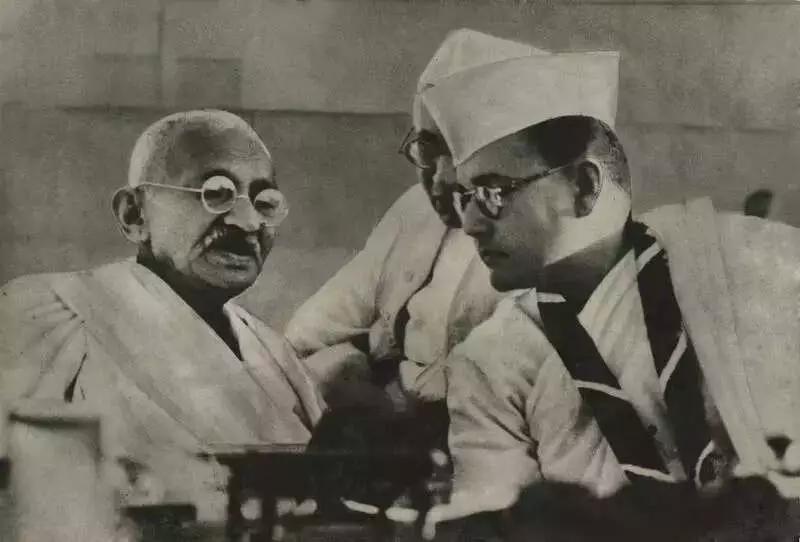
Netaji's Overlooked Connection to Prayagraj: A Testament to His Patriotic Accommodation
As India and numerous nations worldwide commemorated the birth anniversary of the iconic freedom fighter Subhash Chandra Bose, a significant chapter of his legacy remains largely unknown to many. This chapter unfolds in the historic Sangam city of Prayagraj, formerly Allahabad, where Netaji demonstrated his profound patriotic spirit and willingness to bridge ideological divides for the nation's cause.
The 1939 Allahabad Visit: A Milestone in Bose's Political Journey
Detailing this pivotal moment, Professor Yogeshwar Tiwari, former head of the Department of Medieval and Modern History at Allahabad University, sheds light on Bose's visit on September 29, 1939. "What Bose expressed in Allahabad, though not widely recognized, stands as remarkable and can be considered a milestone in comprehending his nature of accommodating others' perspectives for the nation's benefit," Prof. Tiwari emphasized.
It was on this sacred soil that Bose made a compelling offer: "If only the Congress took up the struggle, all differences would vanish. There are only two alternatives left—united struggle or united surrender." This statement underscores his readiness to set aside personal and political disagreements with Mahatma Gandhi and align with the Congress, especially at a critical juncture shortly after forming the Forward Bloc.

Context: Bose's Tumultuous Relationship with Congress
To understand the significance of this offer, one must revisit Bose's political trajectory. He was elected president of the Haripura Congress session in 1938 and re-elected in early 1939 at the Tripuri (Jabalpur) Congress session, defeating Dr. Pattabhi Sitaramayya, who had the backing of Mahatma Gandhi and the Congress Working Committee. Following his re-election, the Congress Working Committee members resigned, leading to further tensions.
At the subsequent Tripuri meeting, Bose issued a stark warning about an impending imperialist war in Europe, urging Congress to deliver a six-month ultimatum to Britain. He advocated for launching a nationwide struggle for Poorna Swaraj if Britain rejected the demand. However, his counsel was ignored, and his presidential powers were threatened with curtailment. Consequently, Bose resigned in April 1939 and announced the formation of the Forward Bloc within the Congress in May 1939.
Bose's Allahabad Engagements: Inspiring Youth and Advocating Unity
Prof. Tiwari recounted that Bose's visit to Allahabad commenced with a flag-hoisting ceremony at Manmohan Park in Katra on September 30, 1939. He then addressed the University Leveller's Society at Holland Hall, where he focused on the war crisis. "The first duty of Indians, and of Indian youth in particular, in such a crisis was not to surrender and not to allow the nation to surrender," Bose declared, cautioning against accepting compromises as a halfway measure toward Poorna Swaraj.
During this address, a student named Ram Naresh Shukla questioned Bose about the viability of a party within a party, referring to the Forward Bloc within Congress. Bose responded by clarifying that the 'left' was so committed to reviving the struggle that they were prepared to forget minor differences and rally behind the Congress Working Committee.
Bose also spoke to students at the Senate Hall of Allahabad University, urging them to take initiative. "It was not the time to sit down and wait; the time came when the public should take the initiative and give expression to their opinion," he appealed. Additionally, his visit included a stop at the NagVasuki temple in the Daraganj locality, highlighting his engagement with the local community.
Legacy: A Lesson in National Unity and Sacrifice
This overlooked episode from Netaji's life serves as a powerful reminder of his unwavering dedication to India's freedom. Despite forming the Forward Bloc and facing opposition within Congress, his willingness to unite for the larger cause in Allahabad reflects a deep-seated patriotism that transcends political rivalries. As we honor his birth anniversary, revisiting such moments enriches our understanding of his complex yet inspiring legacy, emphasizing the importance of accommodation and collective effort in nation-building.






