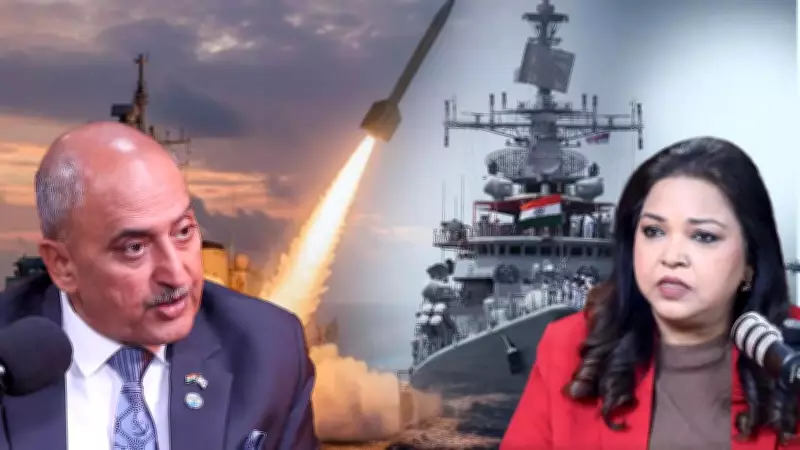
Navy Veteran Recalls Tense Kargil Deployment: 'We Were Seconds Away' From Executing Strikes
In a startling revelation from the 1999 Kargil conflict, a former Indian Navy spokesperson has disclosed the high-stakes, top-secret nature of Operation Talwar, one of the Navy's most significant wartime deployments. According to Capt DK Sharma (Retd), frontline warships were positioned with sealed orders that could have triggered immediate military action, bringing the nation to the brink of a broader confrontation.
Operation Talwar: The Navy's Covert Pressure Campaign
During the intense summer of 1999, as Indian forces battled Pakistani intruders in the icy heights of Kargil, the Indian Navy launched Operation Talwar, a strategic maritime maneuver aimed at tightening pressure on Pakistan's critical lifelines. Warships from both the Eastern and Western Fleets were stealthily deployed across the Arabian Sea and the Persian Gulf, creating a formidable naval presence that went largely unnoticed by the public.
Capt Sharma, who served as the Navy's spokesperson at the time, has now revealed that these vessels sailed with sealed envelopes containing meticulously detailed strike orders. These envelopes were to be opened only upon receiving a specific coded signal from headquarters, at which point commanders would have immediate access to pre-planned targets, weapon systems, and precise strike sequences.
'Seconds Away' From Action: The Brink of Escalation
For weeks, the warships patrolled their assigned sectors in a state of high alert, maintaining operational secrecy while encrypted wireless updates kept the entire fleet synchronized. According to Sharma, the tension peaked to such an extent that the Navy was "seconds away" from executing those orders at the height of the conflict.
This revelation underscores the precarious balance of the Kargil War, where a single signal could have escalated the limited land conflict into a full-scale naval engagement. The sealed orders represented a calculated deterrent, demonstrating India's readiness to respond decisively if the situation demanded it.
Historical Context and Strategic Implications
Operation Talwar's details have remained largely classified until now, offering a rare glimpse into the Navy's role during a conflict often remembered for its mountain warfare. The deployment not only showcased India's maritime capabilities but also served as a silent warning to Pakistan, highlighting the vulnerability of its sea routes.
The use of sealed envelopes with advance strike plans reflects meticulous military planning, ensuring that commanders could act swiftly without delays in communication or decision-making. This approach minimized the risk of operational leaks and maintained the element of surprise, crucial in wartime scenarios.
Capt Sharma's account adds a new dimension to the historical narrative of the Kargil War, reminding us of the unseen pressures and covert operations that shaped its outcome. As veterans continue to share their experiences, such revelations enrich our understanding of India's military history and the sacrifices made in defense of the nation.