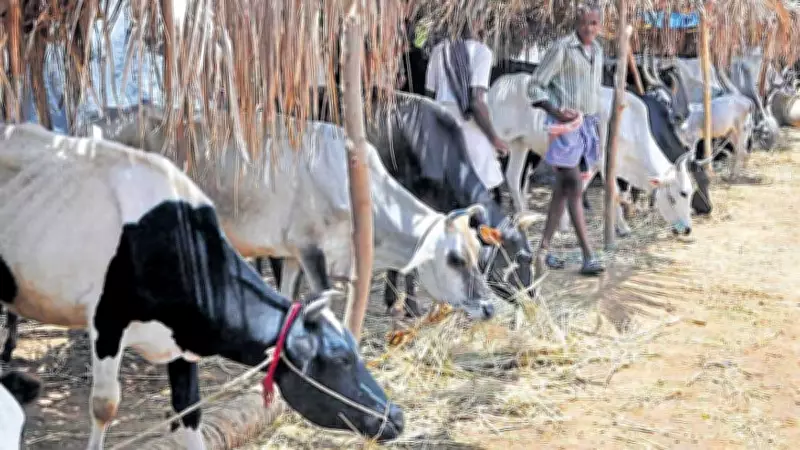
As Muslim groups now demand 'national animal' status for cows, historical records from the Constituent Assembly reveal that Syed Muhammad Saadulla, a prominent Muslim leader from Assam, backed the ban on cow slaughter as a fundamental right. During the framing of the Indian Constitution, Saadulla invoked the Islamic principle of 'no compulsion in religion' to argue for the protection of cows.
Historical Context
Syed Muhammad Saadulla, who served as the Premier of Assam and was a member of the Constituent Assembly, spoke in favor of including cow protection in the fundamental rights chapter. He argued that cow slaughter was not an essential religious practice for Muslims and that the state could impose restrictions for the greater good.
Key Arguments
- No Compulsion in Religion: Saadulla cited Quranic verses to assert that Islam does not mandate cow slaughter, and thus a ban would not violate religious freedom.
- Economic and Agricultural Importance: He emphasized the cow's role in Indian agriculture and the need to protect it for the benefit of farmers.
- National Sentiment: Saadulla acknowledged the deep reverence for cows among Hindus and supported a legal framework to respect that sentiment.
This historical stance contrasts with contemporary demands by some Muslim groups who oppose cow slaughter bans. The records highlight the diversity of opinions within the Muslim community during the Constitution's framing.

Modern Implications
Today, as debates over cow slaughter intensify, Saadulla's arguments are being revisited. His invocation of 'no compulsion in religion' provides a nuanced perspective that balances religious freedom with animal protection. The Constituent Assembly debates remain a crucial reference point for understanding the constitutional intent behind cow protection laws.