Elon Musk and Donald Trump Reunite Publicly After Months-Long Feud
In a surprising turn of events, two of America's most influential figures, Elon Musk and former President Donald Trump, have publicly reconciled after a dramatic falling out earlier in 2025. The reconciliation occurred at a memorial service for Charlie Kirk in September 2025, where the two were seen shaking hands and engaging in conversation for the first time since their public dispute in April of that year.
A Stadium Gathering in Glendale, Arizona
The emotional memorial took place at a stadium in Glendale, Arizona, drawing tens of thousands of attendees to honor Charlie Kirk, who was tragically shot and killed on September 10 at a university campus in Utah. Musk and Trump were observed sitting together in the stands, marking a significant moment in their relationship.
Since this public reunion, Elon Musk has intermittently shared posts on his social media platform X, formerly known as Twitter, featuring Donald Trump and individuals closely associated with him. In a notable post from January of this year, Musk wrote, "Had a lovely dinner last night with POTUS and FLOTUS," accompanied by a photograph of the trio seated together at a table. He optimistically added, "2026 is going to be amazing!"

Diverging Views on Renewable Energy at Davos
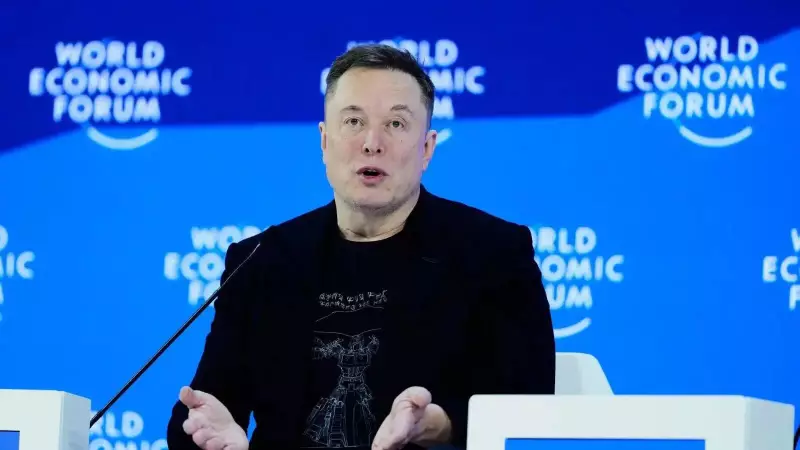
Despite their renewed friendship, a clear policy divergence emerged during Elon Musk's debut appearance at the World Economic Forum (WEF) in Davos, Switzerland, earlier this year. For years, Musk had criticized the WEF's annual meeting as 'elitist, unaccountable and disconnected from ordinary people.' However, he participated in an interview with WEF interim co-chair Larry Fink, where he promoted solar energy technology—a stance that directly contradicts Donald Trump's public criticisms of clean energy sources.
Breaking ranks with Trump, Musk asserted that the United States has the potential to generate sufficient solar power to meet all its electricity demands, including the escalating needs of power-hungry data centers driven by the expansion of Big Tech. This statement is particularly significant given Trump's consistent advocacy for increased oil and gas drilling, coupled with his skepticism toward renewable energy initiatives.
Musk's Long-Standing Advocacy for Solar Energy
This is not the first instance where Elon Musk has emphasized the importance of solar energy. He has been a vocal proponent on multiple occasions, highlighting its crucial role in addressing global energy crises. During his Davos interview, Musk elaborated, "You could take a small corner of Utah, Nevada or New Mexico—a very small percentage of the area of the US—to generate all of the electricity that the US uses."
He further explained the challenges, noting, "Unfortunately, the tariff barriers for solar are extremely high, making the economics of deploying solar artificially high." To combat this, Musk revealed that both SpaceX and Tesla are independently working towards manufacturing 100 gigawatts of solar power capacity in the United States, a project he estimates will take approximately three years to complete.
Policy Implications and the AI-Driven Energy Demand
The timing of this debate is critical, as the United States faces a surge in energy requirements, largely fueled by the rapid growth of artificial intelligence technologies. Trump's administration has implemented a freeze on approvals for major onshore wind and solar projects, leaving thousands of megawatts of potential capacity in limbo. This policy decision complicates efforts to secure adequate power to meet the soaring, AI-driven electricity demands, creating a contentious backdrop to Musk and Trump's renewed relationship.
The reconciliation between Elon Musk and Donald Trump underscores the complex interplay between personal alliances and policy disagreements in American public life. While their friendship has been rekindled, their differing views on energy policy highlight ongoing debates about the nation's future energy strategy.