Mumbai's Election Season Sparks a Parallel Economy
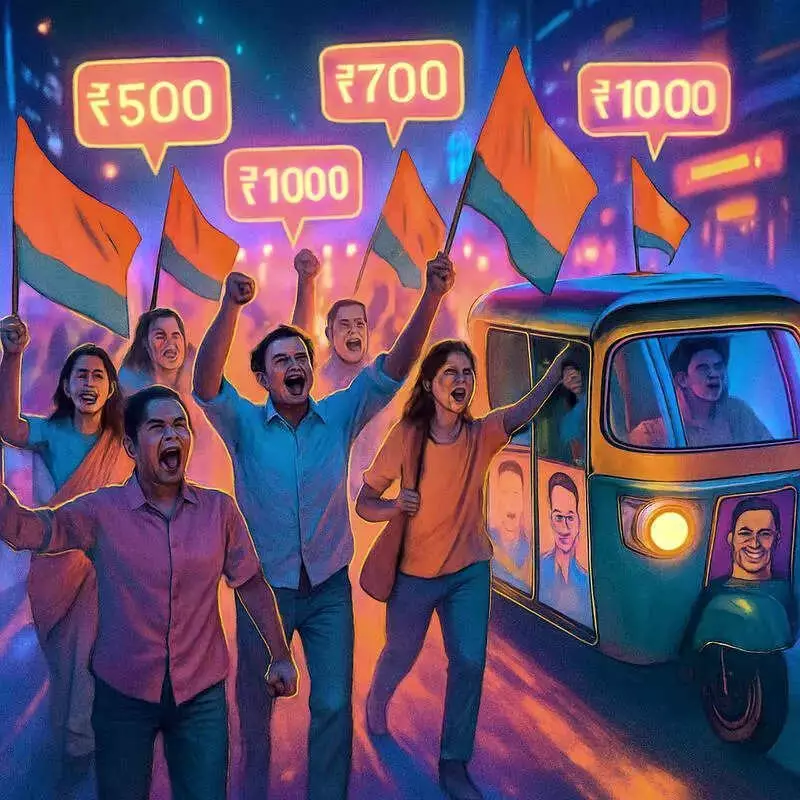
Blue loudspeakers blared party slogans across the winding roads of Thane's Yeoor Hills earlier this week. Flags jutted out from auto-rickshaw mirrors, plastered with candidates' smiling faces. One such auto slowed down, its driver offering a ride to the gate. When politely declined and asked about his political affiliation, he quickly clarified the situation.
"This isn't my rickshaw," he explained. "It belongs to a friend. I'm driving it because we get 1,500 rupees per day for the campaign. Please don't put my name in the paper, madam."
Welcome to the sweet economics of election season in Mumbai. Across the metropolitan region, the campaign period leading up to municipal polls has triggered a parallel informal economy. This quiet system employs thousands from the city's slums, chawls, and working-class neighborhoods as temporary foot soldiers of democracy.

Women Join Campaign Trails for Financial Incentives
Surekha Bhoir, a domestic help from Bhandup, described how many women like her sign up to wear party scarves over their sarees and join campaign trails. "The women come from slums and chawl pockets," she said. "We are offered money for carrying flags, shouting slogans and following the candidate. Some are maids, some cooks, some housewives."
Aparna, who lives in a modest Thane neighborhood and works as a cook in several Ghodbunder households, recently participated in a local rally. "I was paid a modest amount for my two-hour presence," she revealed. "Some of my colleagues and neighbors—cooks and housemaids—are participating almost daily. They can earn anywhere between 500 and 1,500 rupees per day."
The financial pull disrupts everyday routines. A Thane resident complained that several domestic workers in her building had taken leave over the past few days. "They told me the money from campaign work is simply more than what they make here," she explained.
Campaign Rates and Daily Schedules
A personal assistant to a senior politician outlined the going rates for campaign work. "For carrying flags, maids and auto drivers get up to 1,000 rupees per day," he said. "Women campaigners get 500 to 700 rupees. The day starts at 9 am till 2 pm, then again from 5 pm to 10 pm."
Alongside these workers walk young men with microphones and loudspeakers. Some are students earning easy pocket money. Others manage social media campaigns, sometimes unpaid, sometimes for a fee, amplifying the candidate's digital footprint.
Financial Relief for Working Families
For some families, the election months bring genuine financial relief. In Belapur, Navi Mumbai, domestic worker Vrushali Koranne says her household income has nearly doubled. "In December and January, my husband and I were hired for extra shifts at party offices and booths," she shared. "I earn about 1,000 more a day, and he makes another 1,500 from extra taxi rides. It is not a bribe. It is paid work."
Her husband Mukesh added that some late-night trips involved transporting supporters as part of mobilization efforts. "Sometimes we go into nearby slums carrying gifts such as clothes or liquor," he said.
Security Guards and Civic Observations
Behind the banners, speeches and slogans, the election spectacle runs on this quiet economy of necessity. In Kharghar, security guard Ram Sharan now earns almost 900 extra rupees daily distributing pamphlets and fixing party flags for five candidates. "We are eight guards in two shifts," he said. "We can send extra money to our hometowns in UP."
In Goregaon, a civic officer observed the transactional nature of participation. "My domestic helpers are campaigning for all major parties," she noted. "They aren't even sure who they will vote for."
Businesslike Approach at Rallies
A similar businesslike approach was visible at a recent public rally in Shivaji Park. Several residents from Dharavi's Kumbharwada arrived around 8:15 pm. They had been paid 500 rupees for the evening. After collecting food boxes and stuffing them into their bags, they left by 9:15 pm.

By the time the main speaker took the stage, the ground was largely filled with empty chairs. Since protocol demands that party workers stay till the very end of the rally, this quiet departure bemused a seasoned onlooker.
In Airoli, a retired senior citizen now spends his mornings and evenings at a party office. His wife says he joined not from ideology, but routine. "They promised daily payment, but say it will come only after the results," she said, uncertain if it ever will.
Across Mumbai, Thane and Navi Mumbai, democracy's loudest season has become the working class's busiest one. The election economy provides temporary employment for thousands while revealing the transactional realities of political campaigning.