Mumbai Traffic Shows Modest Improvement in Global TomTom Index 2025
India's financial capital Mumbai continues to grapple with significant traffic challenges, according to the latest TomTom Traffic Index 2025, despite recording marginal improvements in congestion levels. The comprehensive annual report, which monitors traffic flow across nearly 500 cities worldwide, reveals that Mumbai experienced a slight decline in congestion during 2025 compared to the previous year.
Mixed Results for Mumbai Amid Global Traffic Trends
While Mumbai joined a select group of cities witnessing some easing in slow-moving conditions, the metropolis remains firmly entrenched in traffic woes. Motorists in Mumbai still endure painfully slow journeys, spending substantial time navigating the city's roads daily. Globally, Mumbai ranks 18th in traffic congestion, while domestically it occupies a mid-table position among major Indian metropolitan areas.
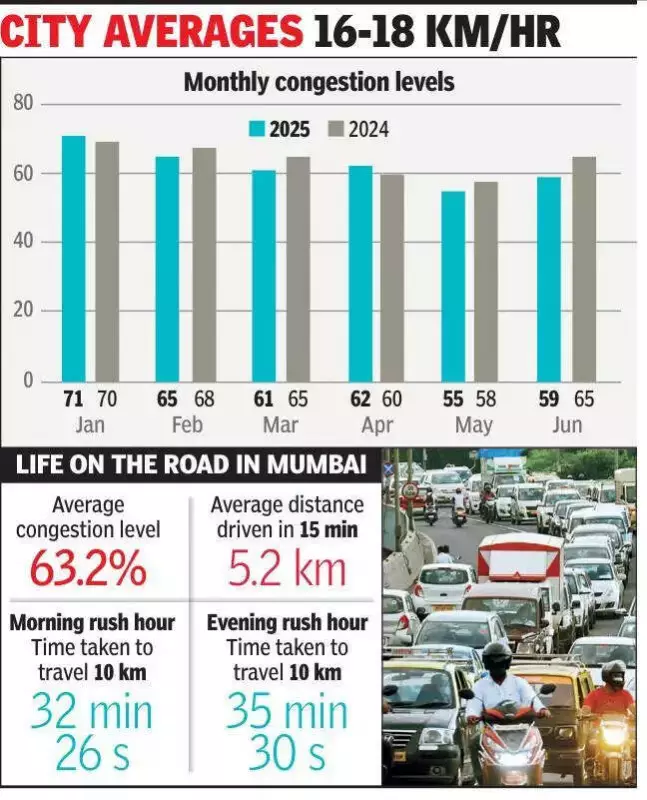
The decrease in Mumbai's congestion levels during 2025 represents a notable deviation from the global pattern, where most cities experienced worsening traffic conditions. Current estimates indicate that the average distance covered in 15 minutes within Mumbai now stands at 5.2 kilometers, marking a 0.4-kilometer improvement from 2024 figures.

Rush Hour Realities and Comparative Analysis
Morning rush hour speeds in Mumbai are estimated at 18.5 kilometers per hour, while evening peak traffic moves at approximately 16.9 kilometers per hour. Despite Mumbai's slight congestion relief, other major Indian cities continue to face severe traffic challenges.
Bengaluru emerges as India's most congested city, securing the second position globally in traffic congestion rankings. With an average rush-hour speed of just 13.9 kilometers per hour, Bengaluru commuters lose approximately 168 hours annually to traffic delays.
The traffic scenario across Indian metropolitan centers reveals:
- Pune ranks as the fifth most congested city globally and second in India
- Delhi maintains a global rank of 23 and features among India's top five congested cities
- Kolkata holds the 29th position globally and ranks sixth nationally in traffic congestion
Beyond Raw Numbers: The Complex Reality of Traffic Data
Transportation experts caution that raw congestion statistics don't provide a complete picture of commuting realities. While Mumbai demonstrated lower congestion levels—measured as delay relative to uncongested travel—actual travel time per kilometer often remained unchanged or improved only marginally.
Urban planners emphasize that various factors influence traffic measurements, including changes in road design, speed limit adjustments, and modal policies such as dedicated bike lanes and pedestrian spaces. These elements can create discrepancies between theoretical "free-flow" conditions and real-world commuting experiences.
Mumbai's mixed traffic results reflect the complex interplay between surging vehicle numbers and ongoing infrastructure developments. Despite the implementation of expanded metro corridors, coastal road links, and elevated highway projects, transportation specialists note that without corresponding increases in public transport adoption and effective demand-management strategies, traffic improvements will likely remain incremental.
Expert Perspectives on Traffic Measurement Challenges
"The data clearly demonstrates that relative contraction in congestion doesn't automatically translate to better commuting experiences," explained a transportation analyst familiar with the findings. "This reflects the fundamental choice drivers face: enduring stagnant traffic conditions or experiencing marginally slower free-flow times that still result in significant overall delays."
On the global stage, Mexico City and Dublin continue to report some of the world's worst traffic congestion levels. Interestingly, even mid-tier cities across Europe and North America witnessed increased travel times during 2025, highlighting the widespread nature of urban mobility challenges.

The TomTom Traffic Index 2025 underscores the persistent nature of traffic congestion in major urban centers worldwide, with Indian cities featuring prominently among the most affected locations. While Mumbai shows tentative signs of improvement, the broader picture reveals that comprehensive solutions addressing both infrastructure development and behavioral changes remain essential for meaningful traffic management.