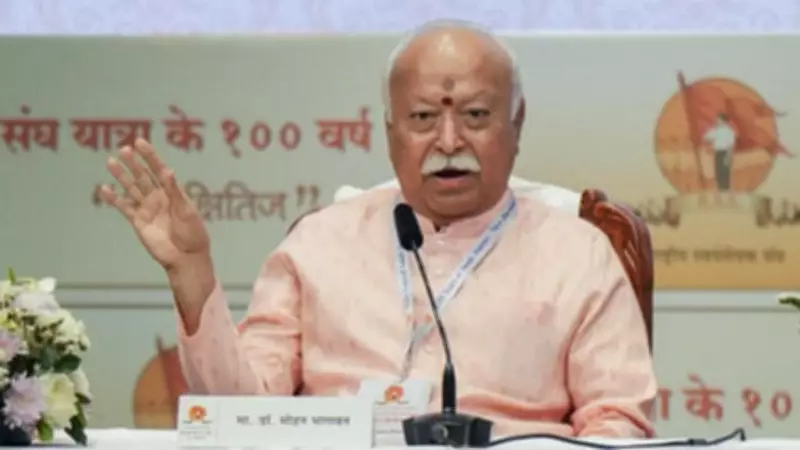
RSS Chief Mohan Bhagwat Expresses Willingness to Step Down if Sangh Requests
In a significant statement, Rashtriya Swayamsevak Sangh (RSS) chief Mohan Bhagwat has declared his readiness to step down from his position if the Sangh asks him to do so. This remark highlights the organizational discipline and collective decision-making ethos within the RSS, where leadership roles are viewed as responsibilities rather than personal entitlements.
Bhagwat's Comments on Leadership and Succession
During a recent interaction, Bhagwat addressed questions about his tenure and the future leadership of the RSS. He emphasized that his role is contingent on the Sangh's directives, stating clearly that he would not hesitate to resign if the organization deemed it necessary. This underscores the RSS's structured approach to leadership, where individuals serve at the pleasure of the broader Sangh community.
On the potential for a leader from Scheduled Caste (SC) or Scheduled Tribe (ST) backgrounds, Bhagwat provided a nuanced response. He explained that he could not give a definitive answer regarding whether the next RSS chief would come from an SC or ST background, as this decision rests entirely with those who appoint the chief. This reflects the RSS's internal processes, where leadership selection is a deliberative matter handled by appointed committees, rather than being subject to public speculation or individual pronouncements.

Implications for RSS's Organizational Structure
Bhagwat's statements shed light on the RSS's governance model, which prioritizes collective wisdom over individual authority. By expressing his willingness to step down, he reinforces the principle that leaders in the Sangh are servants of the cause, not permanent fixtures. This approach has historically contributed to the RSS's resilience and adaptability as a socio-cultural organization.
Regarding the question of SC/ST representation in top leadership, Bhagwat's remarks indicate that while the RSS may be open to diverse backgrounds, the appointment process remains confidential and merit-based. This aligns with the organization's focus on ideological commitment and organizational loyalty over caste or community considerations, though it does not preclude the possibility of leaders emerging from various social strata.
Context and Reactions
The RSS, as a prominent nationalist organization, often faces scrutiny regarding its leadership and inclusivity. Bhagwat's comments come at a time when discussions about social representation and organizational transparency are gaining traction in Indian public discourse. His acknowledgment of the appointing authorities' role in deciding the chief's background suggests a balance between tradition and potential evolution in the RSS's leadership norms.
Observers note that such statements from Bhagwat could influence perceptions of the RSS's internal dynamics, portraying it as an organization where leadership is fluid and responsive to collective will. However, the lack of specifics on SC/ST leadership leaves room for ongoing debate about diversity within the Sangh's upper echelons.
In summary, Mohan Bhagwat's readiness to step down if asked by the Sangh, coupled with his cautious remarks on SC/ST leadership, offers insights into the RSS's operational philosophy. It underscores a commitment to organizational discipline while navigating complex questions of social representation in India's evolving socio-political landscape.