PM Modi Appeals to Women to Ensure Unopposed Passage of Women's Reservation Law
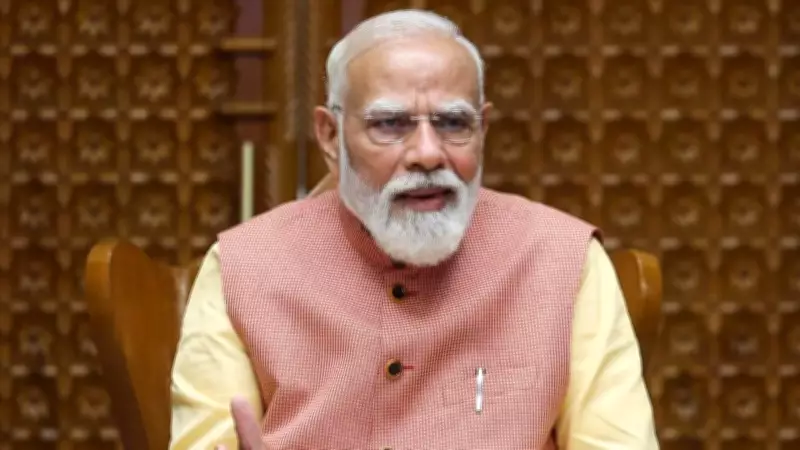
Prime Minister Narendra Modi made his first public remarks on Saturday regarding the government's initiative to implement the women's reservation law starting from the next Lok Sabha elections. Speaking at an election rally in Thiruvalla, Kerala, he urged women across the nation to exert pressure on opposition parties to guarantee that related bills are passed in Parliament without any opposition.
Implementation Timeline and Parliamentary Session Details
Modi announced that Parliament's budget session will reconvene for three days beginning April 16. The primary objective of this session is to enact legislation that will establish a 33% quota for women in both the Lok Sabha and state assemblies. This landmark law is scheduled to take effect from the 2029 Lok Sabha polls, marking a significant step toward gender parity in Indian politics.
The Prime Minister also confirmed that a delimitation exercise will be conducted concurrently to increase the total number of seats in legislatures. This expansion is designed to accommodate the new women's quota without reducing existing representation. Modi emphasized that the additional seats created through this process will be exclusively reserved for women candidates.

Addressing Misinformation About Southern States
In his address, Modi firmly rejected what he termed as "lies" circulating about potential disadvantages for southern states due to their successful population control measures. He stated, "People are spreading the lie that seats will fall where population is declining. We want Parliament's stamp on a law that ensures Lok Sabha seats do not decline in Kerala, Tamil Nadu, Karnataka, Andhra Pradesh, Goa, or Telangana."
The Prime Minister acknowledged the commendable efforts of these states in managing population growth, assuring that their representation would not be compromised. He outlined the government's proposal to increase the number of legislative seats by approximately 50%, which would raise the Lok Sabha constituencies from the current 543 to around 816. While exact figures were not provided, Modi clarified that the additional seats would be allocated solely for women.
Political Strategy and Opposition Engagement
Modi directly appealed to voters in Kerala, a state governed by the CPM-led LDF, to convey a clear message to opposition parties. He said, "You should tell members of Congress and LDF that these laws should be passed unopposed... Women should pressure all political parties." Highlighting the long-standing delay, he added, "I also appeal to them that this right of our mothers and sisters is pending for 40 years. It should not remain so in the 2029 polls."
The Prime Minister noted that his government has proactively engaged with opposition parties on this issue. Meetings have been convened by Home Minister Amit Shah, with some opposition groups from the INDIA bloc participating. However, key parties such as Congress, TMC, and the Left have abstained from these discussions.
Congress and Left parties have called for an all-party meeting, but this appears unlikely given the tight parliamentary schedule. Parliament is set to meet in mid-April, just a week before assembly elections in Tamil Nadu and West Bengal, complicating the logistics for broader consultations.
Electoral Context and Strategic Implications
Kerala is scheduled to go to the polls on April 9, and the Bharatiya Janata Party believes that its push for women's reservation could significantly enhance its appeal among female voters. This move is seen as a strategic effort to gain traction in Kerala, Tamil Nadu, and West Bengal—states that have traditionally been strongholds of opposition parties.
By championing the women's quota, the BJP aims to connect with women voters who have long advocated for greater political representation. The timing of this announcement, ahead of key state elections, underscores the party's intent to leverage this issue for electoral advantage while addressing a critical social demand.

The women's reservation law, if passed unopposed as Modi advocates, would represent a historic advancement in India's democratic framework, ensuring that women have a stronger voice in the nation's legislative bodies starting from the next decade.