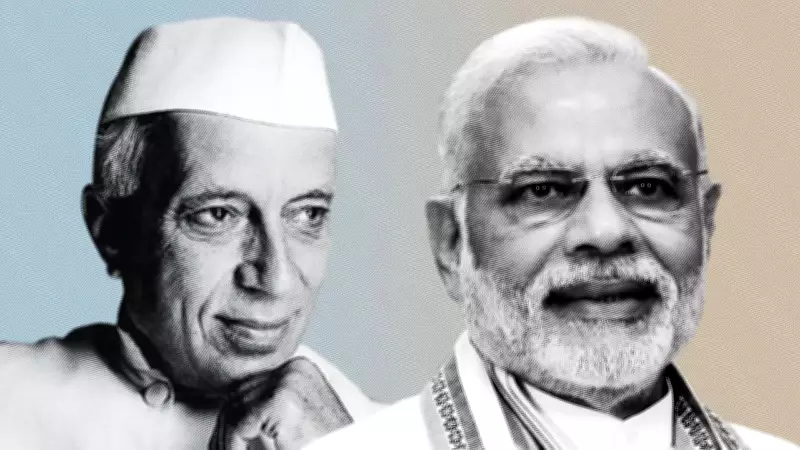
On June 10, 2026, Prime Minister Narendra Modi created history by becoming the longest-serving elected Prime Minister of India, completing 4,399 consecutive days in office. This milestone surpassed the previous record held by Jawaharlal Nehru, who served 4,398 days uninterrupted after leading the Congress party to victories in the first three general elections. Nehru, however, remains India's longest-serving Prime Minister overall, having held office from independence in 1947 until his death in 1964.
The Road to the Record
Modi first took oath as Prime Minister on May 26, 2014, marking the beginning of a dominant political era. His record tenure follows three consecutive Lok Sabha victories, a feat previously achieved only by Nehru. In 2019, Modi led the Bharatiya Janata Party (BJP) to an even larger victory, taking office for a second term on May 30, 2019. His third term began on June 9, 2024, after the BJP fell short of a majority but retained power through the National Democratic Alliance (NDA).
Before becoming Prime Minister, Modi served as Chief Minister of Gujarat for 12 years, from October 2001 until May 2014, a tenure of 4,610 days. Combined with his time as Prime Minister, Modi has now spent over 9,000 days as an elected head of government. In March 2026, he surpassed former Sikkim Chief Minister Pawan Kumar Chamling's record of 8,930 days to become India's longest-serving head of government overall.

How the Lok Sabha Changed
The BJP's rise to three consecutive terms at the center is reflected in its Lok Sabha performance over the past four general elections. After winning 116 seats in 2009, the party more than doubled its tally to 282 seats in 2014, securing the first single-party majority in three decades. It improved to 303 seats in 2019 before slipping to 240 seats in 2024. Despite the decline, the BJP remained the single-largest party and retained power through the NDA. In contrast, the Congress party, which won 206 seats in 2009, fell to 44 seats in 2014 before recovering to 99 seats in 2024.
India's Political Map Transformed
Under Modi's leadership, the BJP transformed India's political landscape, expanding from a party concentrated in the Hindi heartland to a presence across much of the country. When Modi first took office in 2014, the BJP governed just seven states. Today, the party and its allies control 22 states and Union territories. The BJP formed governments in states where it previously had little presence, such as Odisha (2024) and West Bengal (2026), and strengthened its position in traditional strongholds. In the Northeast, the BJP became a key player, governing Assam, Tripura, Arunachal Pradesh, and Manipur, and participating in ruling alliances in Meghalaya and Nagaland.
The party also became dominant in states like Maharashtra and Bihar, where it was once the junior partner to regional allies like the Shiv Sena and Janata Dal (United). Today, the BJP leads governments in both states, with regional allies now in subordinate roles.
Expanding Popularity with Voters
The BJP's legislative gains were driven by increasing voter support. The party's vote share in Lok Sabha elections and state assembly polls rose steadily, reflecting its growing appeal across diverse demographics.
World's Largest Political Party
Under Modi, the BJP expanded its organizational base to become the world's largest political party. In 2015, it overtook the Chinese Communist Party in membership, and subsequent drives widened the gap. By 2025, the BJP claimed around 140 million members, compared to about 100 million for the Chinese Communist Party. This membership base is substantially larger than that of major democratic parties, including the US Democratic and Republican parties.
Global Approval Ratings: PM Modi is No. 1
Modi's popularity at home translated into high global approval ratings. According to Morning Consult's Global Leader Approval Rating Tracker, Modi had an approval rating of 70% as of April 2026, the highest among world leaders tracked. This sustained popularity contrasts with many global leaders who faced declining approval amid economic and political pressures.

Economic Milestones
India's per capita income rose from about $271 in 1980 to an estimated $2,812 in 2026, according to IMF data. Since Modi took office in 2014, per capita income increased from about $1,567 to $2,812, driven by economic growth and integration with global markets. The Covid-19 pandemic caused a temporary decline in 2020, but recovery followed.
India's nominal GDP grew from approximately $2.02 trillion in 2014 to an estimated $4.15 trillion in 2026, according to IMF projections. This growth was fueled by domestic consumption, investment, services sector expansion, and government infrastructure spending. The economy is projected to cross the $4 trillion mark during Modi's third term, though risks from the West Asia conflict, including higher crude oil prices and inflation, remain.
When Can India Become a $5 Trillion Economy?
The goal of a $5 trillion economy was first articulated in the 2019 Union Budget, with a target of 2024-25. However, the Covid-19 pandemic and rupee depreciation delayed this milestone. IMF projections suggest India's nominal GDP could reach about $4.15 trillion in 2026, with the $5 trillion mark expected around 2028-29. By the end of the decade, India is likely to become the third-largest economy, depending on growth, exchange rates, and global conditions.
More than six decades after Nehru's death, the record for India's longest-serving elected Prime Minister has changed hands. While it remains to be seen whether Modi's tenure will match Nehru's overall time in office, the milestone marks the end of one chapter and the beginning of another.