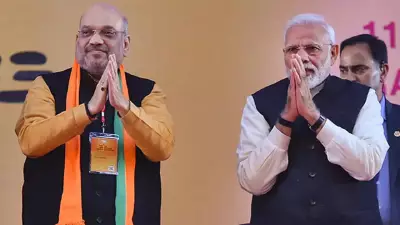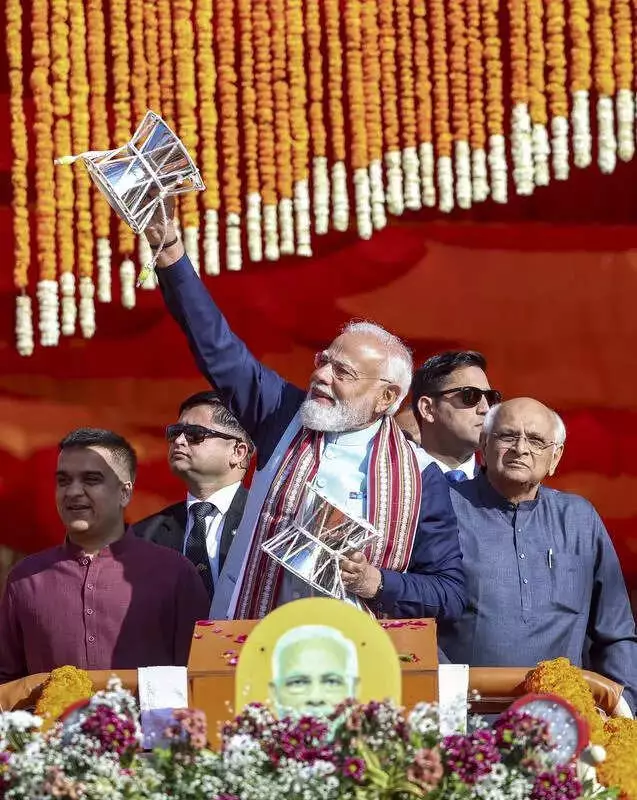
Prime Minister Narendra Modi delivered a powerful address in Somnath on Sunday, issuing a stark warning against political adversaries and forces of appeasement that he claimed continue to conspire against India's unity. Speaking at a public rally as part of the four-day Somnath Swabhiman Parv, the PM commemorated a millennium of the temple's resilience against repeated invasions.
A Call for Vigilance Against Divisive Forces
Without directly naming the Congress or other opponents, Prime Minister Modi urged citizens to remain "extra vigilant". He accused certain lobbies of still employing vile tactics to divide the nation, merely changing their methods from swords to conspiracies. "Unfortunately, the same forces that protested the renovation of Somnath are still active today," Modi stated, linking historical resistance to contemporary politics.
He sharply criticized what he termed "merchants of appeasement" for capitulating to extremist ideologies, contrasting them with people who he said follow their faith sincerely without supporting extremism. The Prime Minister emphasized that India's strength lies in unity and a connection to cultural roots.

Reinterpreting Somnath's Turbulent History
Modi framed the repeated plunder of the Somnath temple over 1000 years not merely as acts of loot, but as "religious terrorism". He accused some historians and politicians of attempting to whitewash this history, trivializing the attacks as being motivated solely by wealth. "They even wrote books to conceal the cruel history of hatred, atrocities and terrorism," he alleged.
The Prime Minister named several historical figures, including Mahmud of Ghazni, Allaudin Khilji, and Aurangzeb, noting their attempts to convert the temple. He credited the shrine's repeated resurrection to the bravery of devotees and Indian rulers like Raval Kanhardev, Veer Hamirji, and Vegda Bhil—figures he claimed were never given due importance.
"Somnath's history is not that of destruction and plunder but that of victory and renovation. It's replete with the bravery of our ancestors," Modi asserted, adding that there are "no parallels" to Somnath's story of retaliation against religious terrorism anywhere in the world.
Post-Independence Struggles and a Civilisational Message
Modi highlighted the challenges faced during the temple's renovation after Independence. He recalled that when Sardar Vallabhbhai Patel pledged to rebuild Somnath, efforts were made to stop him. Objections were also raised to then President Dr. Rajendra Prasad's visit to the reconsecrated shrine in 1951.
Concluding with a broader philosophical message, the Prime Minister said India's civilisation teaches balance and coexistence, not conquest. "Our faith does not teach hatred. Our strength is not meant for destruction," he stated. "Hearts can never be won at the point of a sword. Civilisations that seek prosperity by destroying others ultimately lose themselves to oblivion."
He positioned this thought as what the world needs today, framing India's historical resilience as a lesson in preserving heritage with pride to keep the foundations of civilisation strong.