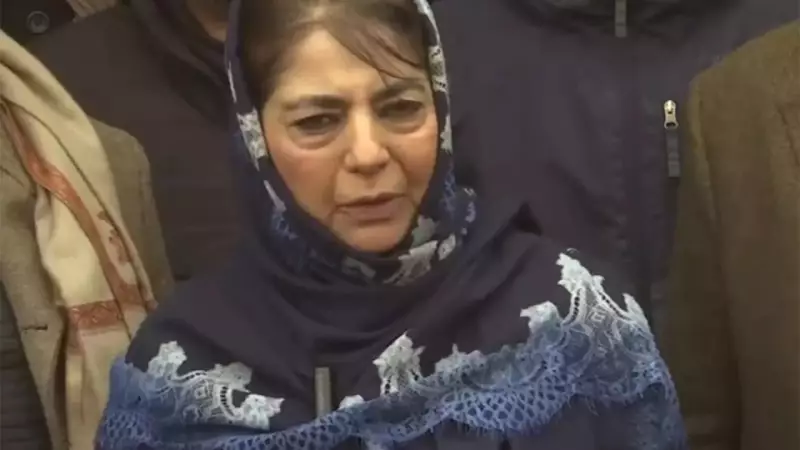
Former Jammu and Kashmir chief minister Mehbooba Mufti strongly criticized police actions on Wednesday. She denounced what she described as the profiling of mosques by authorities in the region.
Profiling Amounts to Religious Interference
Mehbooba Mufti stated that this police activity represents clear interference in religious affairs. She emphasized that it serves as an attempt to humiliate Kashmiri Muslims through systematic targeting.
The Peoples Democratic Party leader made her remarks during a public address in Srinagar. She displayed a four-page police form that authorities are currently using for data collection.

Detailed Information Demanded
According to Mufti, police are seeking extensive personal details about mosque officials and worshippers. This includes photographs, Aadhaar numbers, and other identification documents.
She pointed out that information about mosque lands and management already exists with the administration. The new profiling exercise goes far beyond what she considers reasonable documentation.
Double Standards in Religious Scrutiny
Mehbooba Mufti challenged authorities to apply similar scrutiny to Hindu temples. She specifically mentioned several areas where temples could face examination.
- Identification of priests and their caste backgrounds
- Documentation of entry fees charged at temples
- Recording of discrimination practices within temple premises
The former chief minister noted that such detailed profiling does not occur in mosques. She argued that mosques remain open to all worshippers without discrimination.
Criticism of State Leadership
Mufti also directed criticism toward current political leadership in Jammu and Kashmir. She questioned why Chief Minister Omar Abdullah has remained silent on this issue.
Even though police may not fall directly under his administrative control, she believes he possesses both voice and platform to address the matter. His silence, according to Mufti, represents a failure of leadership.
Broader Implications for Religious Freedom
The PDP chief expressed concern that mosque profiling could expand beyond Kashmir. She warned that this exercise might extend across the entire country if left unchallenged.
Mufti described mosques as being treated like crime scenes under current police practices. She questioned whether authorities would apply similar measures to temples, gurdwaras, or churches.
According to her observations, such intensive profiling does not occur elsewhere in India. This selective targeting of Muslim institutions raises serious questions about religious equality.
Fundamental Questions About Government Role
Mehbooba Mufti raised fundamental questions about government involvement in religious matters. She specifically questioned why authorities need information about whether someone follows Shia, Sunni, or Barelvi traditions.
She contrasted this with practices at many temples where discrimination persists. Unlike mosques that welcome all worshippers, some temples continue to bar Dalits and women from entry.
The former chief minister concluded with a direct question to authorities. She asked how much more humiliation Kashmiri Muslims must endure through such profiling exercises.