Mayawati Accuses Casteist Forces of Undermining Ambedkar's Constitutional Vision
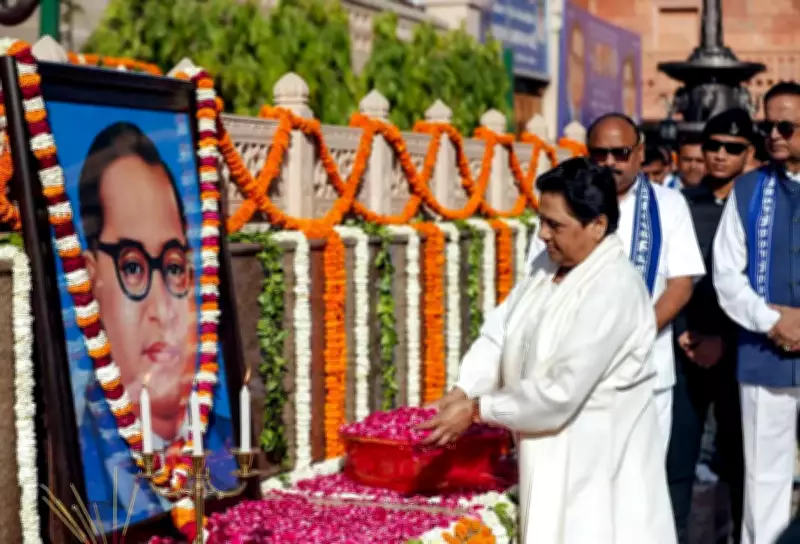
In a pointed address on Tuesday, Bahujan Samaj Party (BSP) president Mayawati squarely blamed "elements with a casteist mindset" for systematically weakening the Constitution framed by Dr. BR Ambedkar. Speaking from the party office in Lucknow on Ambedkar's birth anniversary, she emphasized the urgent need to evaluate how far the promises of security, dignity, and development for the Bahujan Samaj have been realized over the decades.
Constitutional Ideals Versus Political Reality
Paying rich tributes to Babasaheb Bhimrao Ambedkar, Mayawati described the Constitution as "extremely humanitarian" and designed for the welfare of all, particularly the bahujans—encompassing Scheduled Castes (SCs), Scheduled Tribes (STs), Other Backward Classes (OBCs), and religious minorities. However, she lamented that feudalistic and casteist dominance in long-standing power structures has prevented its pure objectives from being implemented in both letter and spirit across the nation.
Questioning India's Developmental Trajectory
The BSP leader posed a critical question: despite possessing what she termed an "incomparable Constitution," why has India failed to become a self-reliant, developed country? She highlighted the persistent struggles of crores of bahujan families, who continue to grapple with:

- Poverty and unemployment
- Caste-driven hatred and discrimination
- A pervasive sense of helplessness
- Lack of equality and justice
Mayawati asserted that only by addressing these fundamental issues can the movement for social change and economic freedom, initiated by Ambedkar, gain electoral momentum and achieve its ultimate goals.
BSP's Claim as the True Heir to Ambedkar's Legacy
Emphasizing the unique relevance of a BSP government, Mayawati declared her party as the sole political entity that genuinely follows Ambedkar's ideals and the principle of "sarvajan hitaay, sarvajan sukhaay" (welfare and happiness for all). She contrasted this with other political parties in Uttar Pradesh, which she accused of merely paying lip service to Ambedkar's legacy while failing to honor it substantively.
Historical Context and Political Struggles
Mayawati reminded bahujan communities of past disrespect shown by various opposition-led central governments, which delayed awarding Bharat Ratna to Ambedkar. She credited her own political ascent and sustained advocacy for eventually compelling the VP Singh-led coalition government to confer the honor and implement the Mandal Commission's recommendations, establishing 27% reservation for OBCs in education and government employment.
Statewide Tributes and Commemorations
Meanwhile, BSP workers from across Uttar Pradesh gathered at the Ambedkar memorial in Lucknow to pay homage to the Dalit visionary and chief architect of the Indian Constitution. The party organized similar commemorative programs in other states, underscoring its nationwide commitment to Ambedkar's principles.
Mayawati's remarks come at a time of heightened political discourse around social justice and constitutional values, positioning the BSP as a critical voice for marginalized communities in India's evolving democratic landscape.