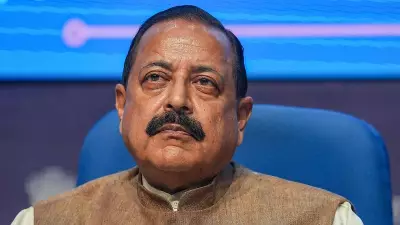
Punjab Chief Minister Challenges Narrative on Delhi's Air Pollution
Amid a severe air quality crisis in the national capital, Punjab Chief Minister Bhagwant Mann on Tuesday made a bold statement, asserting that smoke from stubble burning in his state does not reach Delhi. He presented a scientific argument to counter the long-standing blame placed on Punjab's farmers for the deteriorating air quality in the capital region.
The Science and Sarcasm Behind the Claim
Chief Minister Mann explained that for smoke to travel from Punjab to Delhi within a 10-day period, it would require a consistent north-to-south wind blowing at a speed of 30 kilometers per hour, a meteorological condition he claims never occurs. "The smoke from Punjab doesn't even reach Delhi," Mann stated during a press conference in New Delhi. "For smoke to travel from Punjab to Delhi in 10 days, it requires wind blowing from North to South at 30 kmph, which never happens... The smoke that travels to Delhi stays over Connaught Place! What a joke!"
Mann further highlighted that Delhi's air quality had turned severe even before paddy harvesting commenced in Punjab. Delhi's Air Quality Index (AQI) had already crossed 400 prior to the harvesting season, indicating other significant contributors to the pollution. He pointed out that Delhi is surrounded by Haryana, Rajasthan, and Uttar Pradesh, and has its own substantial sources of pollution, suggesting a more complex problem than just farm fires from a single state.

Political Tensions and Air Quality Realities
The Chief Minister's remarks came shortly after Delhi Chief Minister Rekha Gupta criticized the Punjab government over stubble burning at the Northern Zonal Council meeting on November 17. The meeting, chaired by Union Home Minister Amit Shah, was held in Faridabad and focused on the regional air pollution issue.
Meanwhile, the air quality in Delhi remained in the "very poor" category on Tuesday, with the overall AQI recorded at 344. Data from the Central Pollution Control Board (CPCB) revealed an even grimmer picture at four monitoring stations, where pollution levels entered the "severe" zone:
- Bawana: 426
- Wazirpur: 412
- Jahangirpuri: 418
- Vivek Vihar: 402
Forecasts indicate that the air quality is likely to remain in the "very poor" category for the coming days, prolonging the public health crisis.
Public Anger Boils Over: Protests Erupt at Jantar Mantar
The deteriorating air quality has triggered widespread public anger, leading to protests at Jantar Mantar on Tuesday. Hundreds of Delhi residents, including students from Jawaharlal Nehru University (JNU), Delhi University (DU), and Jamia Millia Islamia, gathered to demand immediate government action.
Protesters used industrial-grade respiratory masks as symbolic props and held placards with powerful messages. One placard poignantly asked, "Delhi ICU mein hai, Govt kahan hai?" (Delhi is in intensive care, where is the Government?). Demonstrators emphasized that the poor air quality has been severely impacting daily life across northern India since Diwali, with the AQI consistently remaining above 300 for several days.
This was not an isolated incident. A similar protest was held on November 9 at India Gate, where parents and environmental activists gathered to voice their concerns. Following that event, several protesters were reportedly detained by the Delhi Police due to the absence of official permission for the gathering.
As the debate over the primary sources of pollution continues, the people of Delhi are left grappling with a public health emergency, demanding concrete and collaborative solutions from their leaders.