

Unprecedented Deployment of Micro-Observers Sparks Political Firestorm in West Bengal
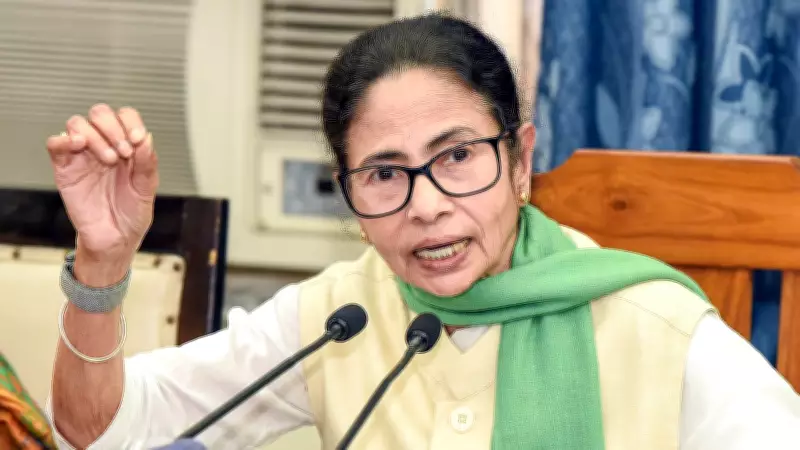
In a dramatic legal confrontation, West Bengal Chief Minister Mamata Banerjee personally presented her case before the Supreme Court, challenging the Election Commission's controversial decision to deploy approximately 8,100 micro-observers exclusively in her state during the Special Intensive Revision of electoral rolls. This unprecedented move has ignited a fierce political battle, with Banerjee accusing the EC of "targeting" Bengal and "bulldozing" its democratic processes on the eve of crucial Assembly elections.
The Core Allegations: Targeting and Manipulation
During her submission before a three-judge Bench headed by Chief Justice Surya Kant, the Trinamool Congress leader raised fundamental questions about electoral fairness. Banerjee demanded to know why Bengal was being singled out when the Special Intensive Revision exercise is simultaneously ongoing in eight other states and three Union Territories. Her primary contention centered on the EC bypassing statutory Electoral Registration Officers to deploy these micro-observers, whom she alleged were predominantly government officials from BJP-ruled states.
"The Election Commission is deliberately targeting West Bengal with ulterior motives," Banerjee asserted in court, highlighting that similar electoral roll revisions were not being conducted in Assam, where elections are also scheduled for March-April. In earlier communications with Chief Election Commissioner Gyanesh Kumar, she had explicitly accused these observers of manipulating data to subvert the democratic exercise in Bengal.

The Mysterious Mandate of Micro-Observers
Remarkably, the Election Commission has maintained complete public silence regarding the specific responsibilities assigned to these 8,100 micro-observers. While announcing the appointment of a Special Roll Observer for eight states including West Bengal on December 12, 2025, the EC issued no official statement about the micro-observers' deployment. Internal instructions obtained from the Bengal Chief Electoral Officer's office reveal that these officials were directed to verify enumeration forms completed by voters, examine submitted documentation, and monitor eligibility hearings for citizens receiving notices.
The Trinamool Congress has escalated these concerns by alleging that micro-observers, including employees from central public sector undertakings and banking institutions, have effectively taken control of the ERONET portal login credentials belonging to Electoral Registration Officers. This development raises serious constitutional questions since the Representation of the People Act, 1951 explicitly designates EROs as the statutory authorities responsible for adding or deleting names from voter lists.
Legal Foundations and Electoral Procedures
The Election Commission has cited Article 324(6) of the Constitution and paragraph 11.4.7 of the Manual on Electoral Rolls, 2023 as legal justification for appointing these officials. The constitutional provision empowers the EC to appoint officers for elections and electoral roll revisions, while the manual section addresses "super-checking" procedures involving District Election Officers, roll observers, and Chief Electoral Officers. However, the manual contains no specific reference to micro-observers for electoral roll revisions, focusing instead on Electoral Roll Observers who are typically senior officers at Divisional Commissioner rank.
Former Chief Election Commissioner O.P. Rawat confirmed the unprecedented nature of this deployment, stating unequivocally that "Never before have micro-observers been appointed for electoral roll revision." Historically, micro-observers have been exclusively utilized on actual polling days, with detailed guidelines available only for their election-day responsibilities as outlined in documents dating back to 2009.

The Election Commission's Defense and State Government Response
In response to Banerjee's allegations before the Supreme Court, Election Commission representatives argued that extraordinary measures became necessary because the West Bengal government failed to provide an adequate number of Sub-Divisional Magistrate rank officers to serve as Electoral Registration Officers for Assembly constituencies. According to EC officials, the state government instead nominated junior-ranking officials for these critical positions, compelling the commission to implement alternative oversight mechanisms through micro-observers.
The EC's Manual on Electoral Rolls does permit the appointment of tehsildar or equivalent rank officers as EROs when sufficient SDM-level officers are unavailable. However, the commission maintains that the micro-observer deployment represents a necessary quality control measure to ensure electoral integrity during the revision process, particularly given the heightened political sensitivity surrounding Bengal's upcoming elections.
Broader Implications for Electoral Democracy
This confrontation transcends immediate political tensions, raising fundamental questions about institutional autonomy, federal relations, and electoral transparency. The absence of clear guidelines for micro-observers in roll revision processes creates ambiguity about their precise authority and accountability mechanisms. Political analysts suggest this case could establish important precedents regarding the Election Commission's discretionary powers during electoral preparations, particularly in politically volatile regions.
As the Supreme Court deliberates on these complex constitutional questions, the outcome will significantly influence electoral administration norms nationwide. The controversy highlights the delicate balance between ensuring electoral integrity and maintaining public confidence in democratic institutions, with West Bengal's political future hanging in the balance as Assembly elections approach.





