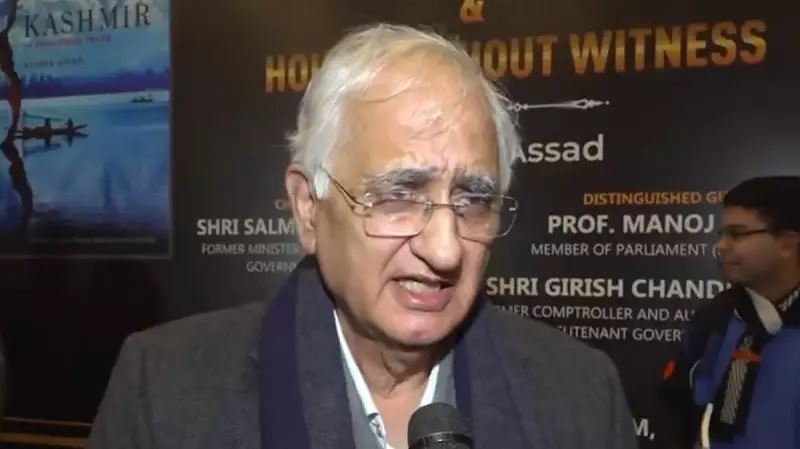
Khurshid Criticizes Supreme Court's Approach to Federalism in Article 370 Case
Former Union Minister Salman Khurshid has voiced strong criticism of the Supreme Court's recent handling of the Article 370 case. He believes the court missed a vital chance to test federalism principles in its landmark judgment.
A Lost Opportunity for Constitutional Interpretation
Khurshid argues that federalism has not always received the attention it deserves in judicial interpretation. While the Indian Constitution explicitly speaks of fraternity, equality, and liberty, the federal structure often gets overlooked in key decisions.
The Supreme Court's verdict on Article 370 presented a perfect moment to examine these federal principles. According to Khurshid, the court failed to seize this opportunity. This oversight could have long-term implications for India's constitutional framework.
The Core of Khurshid's Argument
Federalism remains a cornerstone of India's democratic system. Khurshid emphasizes that the Constitution's federal character needs stronger judicial recognition. The Article 370 case involved critical questions about center-state relations and constitutional autonomy.
By not addressing federalism adequately, the Supreme Court may have set a concerning precedent. Khurshid suggests this could affect future cases involving state rights and constitutional balance.
Why This Matters for Indian Democracy
The former minister's comments highlight several important points:
- Judicial interpretation must consider all constitutional values equally
- Federalism deserves as much attention as other fundamental principles
- Landmark cases shape how future generations understand the Constitution
- The balance between center and states requires constant judicial scrutiny
Khurshid's perspective comes from his extensive experience in constitutional matters and public service. His criticism adds to ongoing debates about judicial activism and constitutional interpretation in India.
The Broader Context of Constitutional Debates
This discussion occurs amid increasing scrutiny of judicial decisions affecting federal structure. Legal experts across India continue to debate how courts should interpret constitutional provisions related to center-state relations.
Khurshid's remarks remind us that constitutional interpretation is not just about legal technicalities. It fundamentally shapes how India's democracy functions and evolves. The Supreme Court's role in protecting federal principles remains crucial for maintaining constitutional balance.
As India continues to develop its constitutional jurisprudence, cases like Article 370 will likely remain reference points for future legal arguments. How courts address federalism in coming years may determine the strength of India's democratic foundations.