Kharge Clarifies 'Terrorist' Remark, Says He Meant PM Modi Is Facilitating Terrorism
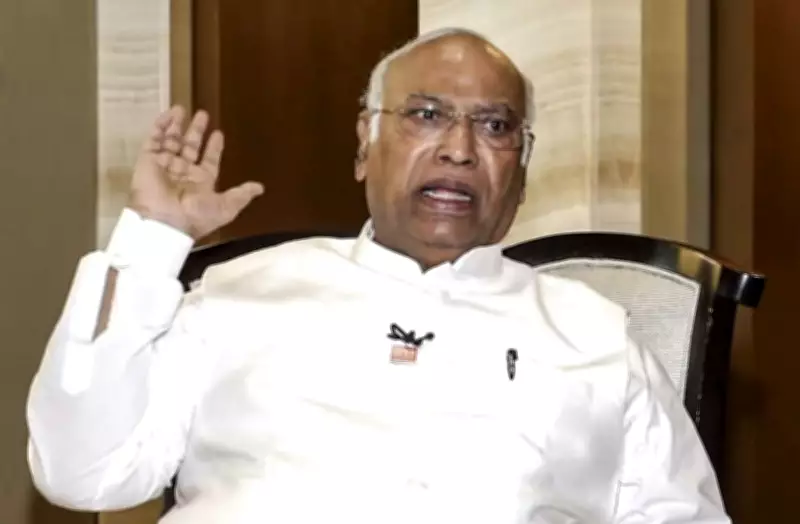
Congress President Mallikarjun Kharge has issued a clarification regarding his recent controversial statement that sparked a significant political uproar. Kharge explained that he did not directly label Prime Minister Narendra Modi as a terrorist but rather intended to convey that the Prime Minister's actions and policies are facilitating terrorism in the country.
Background of the Controversial Statement
The controversy erupted after Kharge made remarks during a public address, where he used strong language that was interpreted by many as calling PM Modi a terrorist. This led to immediate backlash from the Bharatiya Janata Party (BJP) and its allies, who condemned the statement as inflammatory and disrespectful. The political atmosphere grew tense, with demands for an apology and retraction.
Kharge's Detailed Clarification
In his clarification, Kharge emphasized that his words were misconstrued. He stated, "I did not say that the Prime Minister is a terrorist. What I meant was that under his leadership, the government's policies are creating an environment that aids terrorism." He further elaborated that his criticism was directed at the administration's handling of security and counter-terrorism measures, which he believes are inadequate and counterproductive.

Kharge pointed to specific instances, such as alleged intelligence failures and delayed responses to terror threats, as evidence of this facilitation. He argued that these issues undermine national security and put citizens at risk, thereby indirectly supporting terrorist activities.
Political Reactions and Fallout
The clarification has done little to quell the political storm. BJP leaders have dismissed Kharge's explanation as a backtrack and continue to accuse him of using irresponsible language for political gain. They argue that such statements harm the country's image and demoralize security forces.
On the other hand, Congress supporters have defended Kharge, asserting that his remarks were a legitimate critique of government policies. They highlight ongoing concerns about rising terrorism incidents and call for a more robust security strategy from the Modi administration.
Implications for National Discourse
This incident underscores the highly charged nature of political discourse in India, where rhetoric often escalates quickly. It raises questions about the boundaries of criticism in a democracy and how language can impact public perception and policy debates.
Experts suggest that while political leaders have the right to criticize, they must exercise caution to avoid statements that could be misinterpreted or incite violence. The episode also reflects broader tensions between the ruling party and opposition over national security issues.
Looking Ahead
As the controversy continues to unfold, it is likely to influence upcoming political campaigns and debates. Both sides are expected to leverage this issue to rally their bases and sway public opinion. The focus may shift to substantive discussions on terrorism and governance, but the initial uproar has already left a mark on the political landscape.
In conclusion, Mallikarjun Kharge's clarification aims to reframe his remarks as a critique of policy rather than a personal attack, but the political fallout highlights the delicate balance between free speech and responsible discourse in India's vibrant democracy.