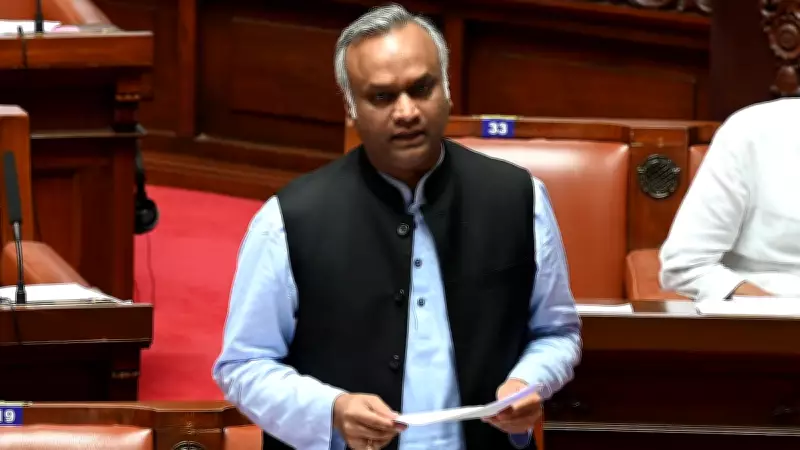
Priyank Kharge Claims Himanta Biswa Sarma's 'Brahmin Privilege' Motivates Attack on AICC Chief
In a fiery defense of his father's contentious statement comparing the RSS-BJP to "poisonous snakes," Priyank Kharge has launched a sharp critique against Assam Chief Minister Himanta Biswa Sarma. Kharge alleged that Sarma's actions are fueled by a sense of caste-based entitlement, specifically pointing to what he termed as "Brahmin privilege." This accusation comes amid escalating political tensions between the Congress party and the BJP-led government.
Defending Mallikarjun Kharge's Controversial Remarks
Priyank Kharge, a prominent Congress leader from Karnataka, stood firmly by his father, AICC chief Mallikarjun Kharge, whose recent comments have sparked widespread debate. Mallikarjun Kharge had drawn parallels between the RSS-BJP and "poisonous snakes," a remark that has been met with criticism from opposition leaders. In response, Priyank Kharge asserted that the BJP and Prime Minister Narendra Modi have failed to address the substantive questions raised by his father, leading to what he described as desperation within their ranks.
"Himanta Biswa Sarma has become desperate," Priyank Kharge stated, emphasizing that the Assam Chief Minister's attacks are a diversion from the core issues. He further elaborated, "Modi or BJP have no answers to the questions raised by Kharge. Himanta has caste privilege and it has entered his head." This direct reference to caste dynamics adds a new layer to the ongoing political discourse, highlighting deep-seated social and political divides in India.

Analyzing the Allegations of Caste Privilege
The accusation of "Brahmin privilege" by Priyank Kharge is significant in the context of Indian politics, where caste often plays a pivotal role in electoral and social narratives. Himanta Biswa Sarma, a key BJP figure, has been vocal in his criticism of the Congress leadership, particularly targeting Mallikarjun Kharge. Priyank Kharge's remarks suggest that this criticism is not merely political but rooted in caste-based hierarchies, which he claims influence Sarma's perspective and actions.
This development underscores the intensifying rivalry between the Congress and BJP, with both sides leveraging personal and ideological attacks. The focus on caste privilege could resonate in regions like Karnataka and Assam, where caste identities are closely tied to political affiliations. As the debate unfolds, it raises questions about how caste dynamics continue to shape political rhetoric and strategy in contemporary India.
Broader Implications for Indian Politics
The exchange between Priyank Kharge and Himanta Biswa Sarma reflects broader trends in Indian politics, where personal attacks and caste-based allegations are increasingly common. Key points from this incident include:
- Escalation of Political Rhetoric: The use of strong language, such as "poisonous snakes," indicates a hardening of positions between major parties.
- Caste as a Political Tool: Priyank Kharge's emphasis on "Brahmin privilege" highlights how caste is weaponized in political debates to question opponents' motives.
- Impact on Public Discourse: Such allegations may polarize voters and shift focus from policy issues to identity politics, affecting electoral outcomes.
As reported by Prathima Nandakumar on April 8, 2026, this story continues to evolve, with potential repercussions for upcoming elections and inter-party relations. The defense of Mallikarjun Kharge by his son adds a personal dimension to the political clash, making it a notable episode in India's dynamic political landscape.