Political Rhetoric Intensifies Across State Lines as CMs Clash
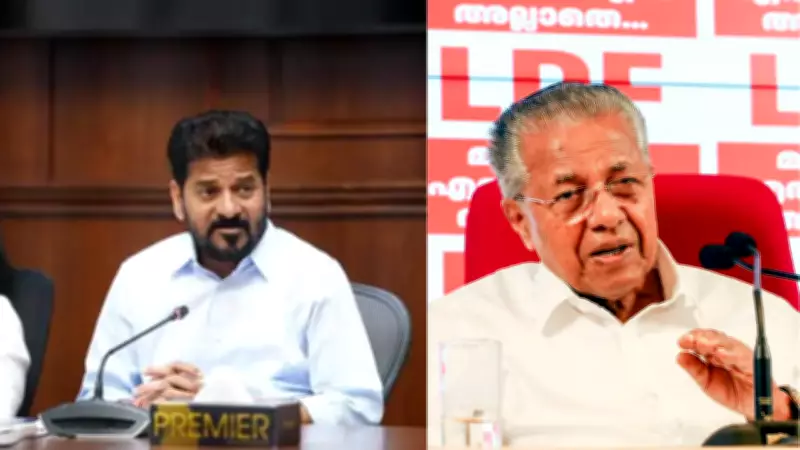
Political rhetoric across state boundaries has dramatically intensified during this election season, with a particularly sharp exchange of words occurring between Kerala Chief Minister Pinarayi Vijayan and his Telangana counterpart Revanth Reddy on the final day of campaigning for the April 9 elections. The verbal confrontation has drawn significant attention and criticism from various quarters.
Vijayan's Response to Reddy's Initial Remarks
At a news conference held in Kannur on Tuesday, Chief Minister Pinarayi Vijayan responded to a query regarding earlier remarks made by Revanth Reddy that targeted him directly. Vijayan emphasized that a chief minister must maintain basic standards of conduct in public discourse. "Such language is inappropriate for a chief minister. However, since he made the allegations in public, I will also respond publicly," Vijayan stated firmly.
The Kerala chief minister then delivered a pointed retort: "At this time, my response is 'Dash... Mone Revantha'; the reply to you is coming soon." This comment quickly sparked widespread criticism for its perceived derogatory nature, adding fuel to the already heated political atmosphere.

Background: Reddy's Provocative Dialogue Reference
Vijayan's jibe was a direct response to earlier comments made by Telangana Chief Minister Revanth Reddy. While speaking at a United Democratic Front roadshow in the Nemom constituency of Thiruvananthapuram on April 2, Reddy had invoked a famous dialogue from actor Mohanlal's character in the 2000 movie 'Narasimham', telling Vijayan "Nee Po Mone Vijaya" (Go away, Vijaya).
Reddy had further asserted that Vijayan's "time is over" and that "his expiry date has passed," using strong language to criticize the Kerala chief minister's political standing and governance.
Reddy's Counterattack and Modi Comparison
Responding to Vijayan's barb, Chief Minister Revanth Reddy escalated the confrontation by likening the Kerala leader to Prime Minister Narendra Modi and repeating his earlier cinematic dialogue. Speaking at an election rally in Pathanapuram, Reddy acknowledged respecting Vijayan as a senior and experienced politician but expressed strong disapproval of what he termed the 'devil's rule' in Kerala.
"Today he abused me. I don't mind that, as he is an elderly person. I will take his abuses as blessings," Reddy stated, attempting to position himself as the more respectful participant in the exchange. However, he quickly added: "But he cannot abuse the people of Kerala or power. He cannot become subservient to Modi."
In a particularly provocative remark, Reddy alleged: "One Modi sits in New Delhi and another in Thiruvananthapuram," suggesting that Vijayan had the support of the Bharatiya Janata Party and communal forces, a serious accusation in the current political climate. Reddy reiterated these criticisms during a poll meeting for the UDF candidate in Mavelikkara, maintaining his aggressive stance against the Kerala chief minister.
Vijayan's Attempt to De-escalate Through Formal Communication
Later, in what appeared to be an effort to dial down the acrimony and refocus the conversation, Chief Minister Pinarayi Vijayan took to social media platform X to post a formal letter addressed to "Dear Shri Revanth Reddy." The detailed letter outlined Kerala's development achievements under his administration, presenting a comprehensive account of the state's progress.
The communication concluded with a message asserting Kerala's continued advancement through the vision of 'New Kerala,' shifting the discourse from personal attacks to policy achievements and governance records. This move represented a strategic attempt to elevate the conversation above the heated rhetoric that had dominated the previous exchanges.
Broader Implications of the Political Confrontation
The sharp exchange between the two chief ministers highlights several important aspects of contemporary Indian politics:

- The increasing tendency for political rhetoric to cross state boundaries during election seasons
- The use of regional cinema references and colloquial language in political discourse
- The delicate balance between political confrontation and maintaining decorum among elected officials
- The strategic shift from personal attacks to policy discussions in public communication
As the April 9 elections approach, this confrontation between two prominent chief ministers from different states serves as a reminder of how regional politics can influence and intersect with broader national political narratives, particularly during crucial election periods when political tensions naturally run high.