Kanshi Ram's Enduring Legacy: A Transformative Journey from Caste Exclusion to Political Empowerment
Born on March 15, 1934, in a Ramdasia Sikh Dalit family in Khawaspur village, Punjab's Rupnagar district, Kanshi Ram emerged from the margins of a caste-ridden society to become one of modern India's most transformative political leaders. Rising from a community historically relegated to the bottom of the caste hierarchy, he channeled his personal experiences of social exclusion into a lifelong mission to dismantle the entrenched structures of caste power that have defined Indian society for centuries.
The Vision of Political Power as the Master Key
In a nation where caste hierarchy has long dictated access to dignity, resources, and political authority, Kanshi Ram recognized that the struggle of oppressed communities could not succeed through isolated protests or mere symbolic inclusion. Inspired by the emancipatory ideals of B.R. Ambedkar, he understood that true liberation required robust organization, heightened political consciousness, and ultimately, the capture of state power by those historically excluded from it. For Kanshi Ram, democracy remained hollow if the vast majority of people continued to be sidelined from decision-making processes.
His journey began with the establishment of BAMCEF in the late 1970s, which united employees from marginalized communities to create an intellectual and organizational backbone for the burgeoning Bahujan movement. This was followed by the launch of the Dalit Shoshit Samaj Sangharsh Samiti in 1981, a mobilization platform that spread the message of Bahujan unity across villages, towns, and working-class neighborhoods in North India. The culmination of these efforts was the formation of the Bahujan Samaj Party in 1984, a political vehicle explicitly designed to represent the interests of the Bahujan majority and translate social awakening into electoral power.

Building a Coherent Movement for Social Transformation
Kanshi Ram's assertion that "political power is the master key" encapsulated his vision of converting numerical strength into tangible political influence. His democratic principle, "Jiski jitni sankhya bhari, uski utni hissedari" (proportional participation based on population), guided the BSP's strategy, which saw remarkable success in Uttar Pradesh. Under his mentorship, leaders like Mayawati emerged, symbolizing a shift from token representation to actual leadership by Dalits within state structures, with Mayawati eventually becoming Chief Minister.
More than just electoral gains, Kanshi Ram instilled a sense of political self-respect among millions who had long been excluded from centers of authority. His movement aimed not merely at concessions from the existing system but at a fundamental reshaping of democracy itself, where the Bahujan majority would transition from being subjects of power to its rightful holders.
From Social Justice to Radical Social Transformation
Kanshi Ram's political project transcended the limited framework of social justice, which often relied on welfare schemes and symbolic inclusion within mainstream parties. He argued that as long as political power remained concentrated among privileged, elite castes, policies of social justice would remain fragile and dependent on dominant groups' goodwill. His focus was on creating independent Bahujan leadership, breaking the pattern where Dalit leaders served as subordinates in parties dominated by upper-caste elites.
Through organizations like BAMCEF, DS-4, and the BSP, he nurtured a generation of self-respecting, politically conscious leaders capable of challenging caste domination. This approach not only promoted figures like Mayawati but also encouraged broader Bahujan communities to become active makers of political history rather than passive voters.

The Continuing Relevance of Kanshi Ram's Vision
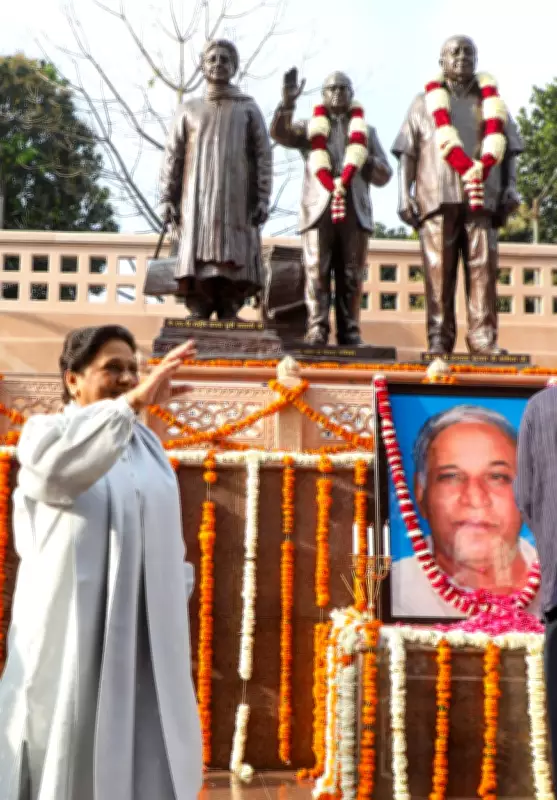
Today, as political parties across the spectrum invoke Kanshi Ram's name and commemorate his birth anniversary, a critical question persists: are they advancing his vision or merely appropriating its symbolism? His legacy continues to resonate across India, having reshaped the democratic imagination and forced a direct confrontation with caste inequalities. However, the essence of his politics—aimed at structural transformation rather than symbolic representation—is often diluted in contemporary discourse.
Kanshi Ram's life stands as a powerful reminder that democracy achieves its true meaning only when historically excluded groups actively participate in shaping society's future. His enduring legacy lies in transforming fragmented struggles into a disciplined political force that challenged centuries-old caste power structures, leaving an indelible mark on Indian politics and social justice movements.