The Political Storm Over India's National Anthem
A recent political controversy has reignited historical debates about India's national anthem, Jana Gana Mana. Karnataka BJP MP and former Speaker Vishweshwar Hegde Kageri sparked protests when he claimed at a 150th anniversary event for Vande Mataram that Rabindranath Tagore composed the anthem as a "welcome song for British officials."
The remarks prompted West Bengal's ruling Trinamool Congress to hold demonstrations demanding action. However, this isn't the first time such claims have surfaced in Indian political discourse.
Historical Context and Political Echoes
Similar allegations have been made by various politicians, scholars, and even a former Supreme Court judge over the decades. They've argued that India's national anthem represents an ode to British rule and reflects sycophantic tendencies.

More than ten years ago, BJP leader and then Rajasthan Governor Kalyan Singh suggested replacing the words 'Jana Gana Mana Adhinayak' with 'Jana Gana Mana Mangaldayak'. He claimed the original translation meant "Hail the Ruler" while his proposed version would mean "one who brought prosperity and joy."
Tagore's Own Words: Setting the Record Straight
What remains undisputed is that India's national anthem forms part of a larger poem called 'Bharoto Bhagyo Bidhata' and was first performed in 1911 during the Delhi Durbar honoring King George V and Queen Consort Mary.
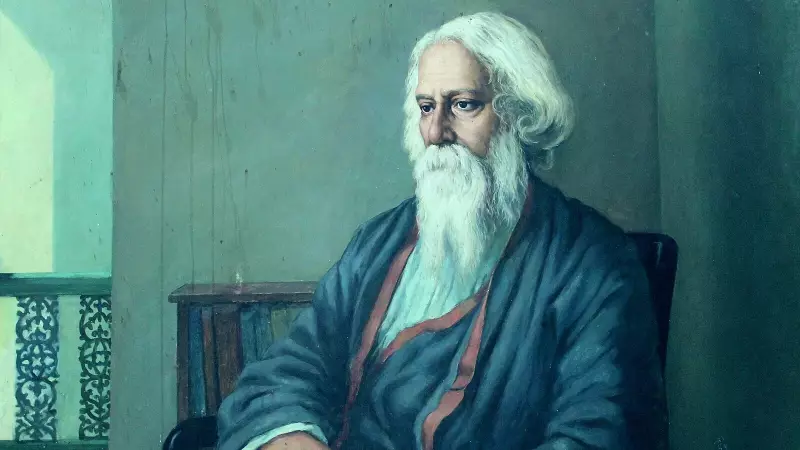
Tagore himself addressed the rumors directly in a letter dated November 20, 1937, to his editor and bibliographist Pulin Behari Sen. The Nobel laureate wrote: "neither the Fifth nor the Sixth nor any George could be the maker of human destiny through the ages."
He clarified his intentions clearly: "I had hailed in the song 'Jana Gana Mana' that Dispenser of India's destiny who guides, through all rise and fall, the wayfarers, He who shows the people the way..."
The Divine Interpretation
Evidence from the original poem suggests it was addressed to a divine entity rather than any mortal ruler. The third stanza reads: "Paten obhyudoy bondhur pontha, jug jug dhabito jatri. Ohe chiro-sharothi, taba rathachakre mukhōrito patha dinōratri" which translates to "Eternal charioteer, thou drivest man's history / Along the road that is rugged with the rise and fall of nations."
Academic Perspective: Debunking the Myth
Eminent historian the late Prof Sabyasachi Bhattacharya addressed this controversy in his 2011 book 'Rabindranath Tagore: An Interpretation'. He confirmed that while Tagore had been asked to write a welcome song for King George V, the poet declined and wrote this poem instead.
Bhattacharya wrote: "To see George V as the object of worship in place of 'Dispenser of India's destiny... Thou King of all Kings' was not only absurd but also sacrilegious to Tagore."
The historian presented crucial chronological evidence: "The song was written on December 11, 1911. On December 12, 1911, the Delhi Durbar met to honour King George V. Obviously, a poem written on December 11 could not be intended for an event the following day."
The Early Performances
Jana Gana Mana was first sung on December 28, 1911, to open the 27th session of the Indian National Congress. The next recorded performance occurred in 1912 during the foundation day anniversary of Adi Brahma Samaj, where it was included in their collection of psalms called Brahma Sangit.
Bhattacharya emphasized that "He did not write it for the Congress either. It was a hymn to his maker, the guardian of the country's destiny."
The Journey to Becoming National Anthem
The transformation of Tagore's composition into India's national anthem began with Netaji Subhas Chandra Bose. On a cold November day in 1941, Bose decided to use Jana Gana Mana during the inauguration of the Free India Centre in Berlin.

During this historic meeting, participants agreed that the Congress Tricolour would become the national flag and Tagore's composition would serve as the anthem. Netaji reportedly deliberated between Tagore's song and Muhammad Iqbal's 'Sare Jahan Se Achha, Hindustan Hamara'.
Why Jana Gana Mana Was Chosen
N.G. Ganpuley, a close associate of Netaji present at the decision, explained in his 'Ganpuley's Memoirs: Author of Netaji in Germany' that Jana Gana Mana was selected because it "defined India as a union of all provinces, languages and religions" and was considered more suitable as the national hymn.
The anthem received its first full orchestra accompaniment during the inauguration of the Indo-German Cultural Society in Hamburg in 1942. Gramophone records were made of this performance, some of which survive to this day.
Official Adoption and Constitutional Status
The journey of Tagore's composition reached its culmination on January 24, 1950, when the Constituent Assembly formally adopted it as India's national anthem. The first President of India, Dr. Rajendra Prasad, made the historic announcement.
He declared: "The composition consisting of the words and music known as Jana Gana Mana is the National Anthem of India, subject to such alterations in the words as the Government may authorise as occasion arises; and the song 'Vande Mataram', which has played a historic part in the struggle for Indian freedom, shall be honoured equally with 'Jana Gana Mana' and shall have equal status with it."
This official recognition established both songs as integral to India's national identity, putting to rest decades of debate while honoring both compositions for their significant roles in India's cultural and freedom struggle heritage.