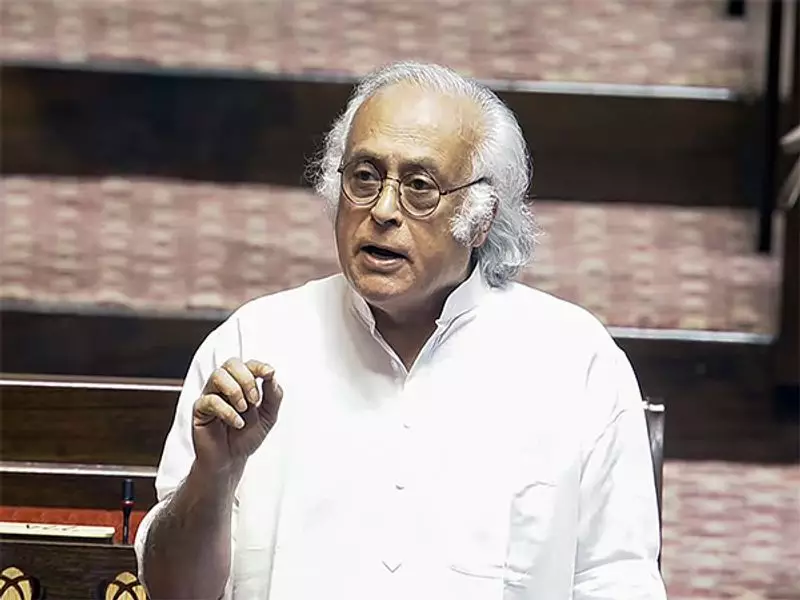
Senior Congress leader Jairam Ramesh has made a significant political allegation, claiming that Prime Minister Narendra Modi pushed for the passage of a crucial bill in 2019 to "restore peace" with the then United States President, Donald Trump. The bill in question is the Jammu and Kashmir Reorganisation Bill, which Ramesh has colloquially termed the "Shanti Bill."
The Allegation: A Bill for Diplomatic Peace
According to Jairam Ramesh, the legislative process for the Jammu and Kashmir Reorganisation Bill, 2019, was expedited in Parliament with a specific diplomatic objective. He asserts that this move was directly linked to a phone conversation between Prime Minister Modi and President Trump. Ramesh suggests that the Indian government was keen to demonstrate decisive action and control following its decisions on Jammu and Kashmir, aiming to reassure and placate the US administration.
The context dates back to August 2019, when the Indian government revoked the special status of Jammu and Kashmir under Article 370 and passed the Reorganisation Act. Ramesh's claim implies that the domestic legislative agenda was, in part, influenced by the need to manage international relations, particularly with a volatile ally like the Trump administration.

Historical Context and the Trump Factor
The period in question was diplomatically sensitive. President Trump had previously offered to mediate on the Kashmir issue, a suggestion India had firmly and consistently rejected, maintaining that it is a bilateral matter with Pakistan. Ramesh's allegation paints a picture of the Modi government proactively using legislative action as a tool for diplomatic communication.
By fast-tracking the bill, Ramesh implies, the government sought to send a clear message to Washington that the situation was under New Delhi's firm control, thereby "restoring peace" in the dialogue and preempting any further mediation offers. This narrative connects domestic policy with foreign policy maneuvering in a direct and controversial way.
Political Repercussions and Analysis
This allegation by a key Congress strategist is likely to reignite political debate over the government's motives behind the historic Jammu and Kashmir decisions. It frames the legislative action not solely as a matter of national integration or security, but also as a strategic play in international diplomacy.
If true, it highlights the complex interplay between domestic lawmaking and global geopolitical pressures. The claim suggests that the timing and pace of a landmark constitutional change were calibrated considering their reception by a key foreign power. The BJP-led government has always stated that the decisions of August 2019 were driven purely by national interest and the development of Jammu and Kashmir.
Ramesh's statement, made during a political discourse, adds a new layer of interpretation to a pivotal moment in recent Indian history. It positions the "Shanti Bill" as a diplomatic pacifier, a tool to ensure smooth relations with the Trump White House during a period of significant domestic upheaval. The veracity and implications of this claim are set to be debated vigorously in the political arena.