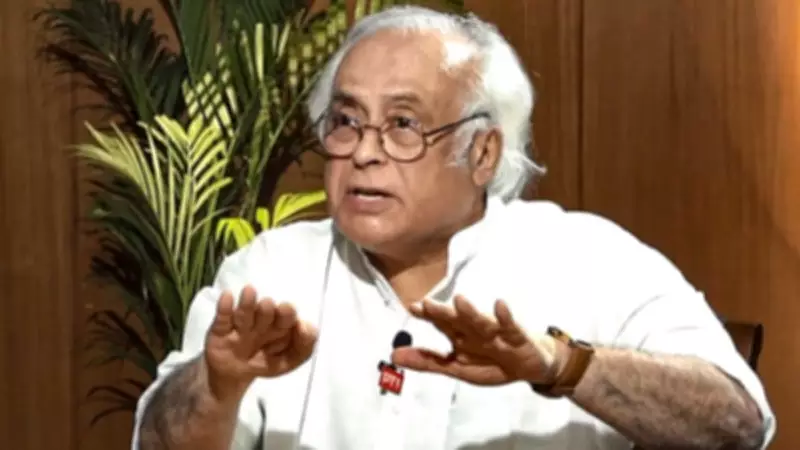
Congress Rajya Sabha MP Jairam Ramesh on Monday launched a sharp critique of the Union Environment Ministry, rebranding it as the 'Pravachan Mantralay' (Ministry of Sermons) for allegedly prioritizing rhetoric over substantive action on environmental protection. Speaking during a debate in the Rajya Sabha, Ramesh accused the ministry of focusing more on delivering speeches than implementing policies to address pressing ecological challenges.
Allegations of Inaction and Neglect
Ramesh, a former Union Minister of Environment and Forests, asserted that the current ministry has strayed from its core mandate. He claimed that critical issues such as deforestation, air pollution, and wildlife conservation have been sidelined in favor of what he termed as 'performative governance'. The Congress leader pointed out that several key environmental laws and regulations have been diluted or not enforced effectively under the current administration.
"The Environment Ministry has become a platform for sermons rather than action. It is now the 'Pravachan Mantralay'," Ramesh said, according to news agency PTI. He further alleged that the ministry's focus has shifted to symbolic gestures rather than tangible outcomes, citing delays in the implementation of the National Clean Air Programme and the weakening of the Forest Conservation Act.

Specific Instances of Policy Failures
Ramesh highlighted specific instances where the ministry had failed to act. He noted that the ministry had not released updated data on forest cover in a timely manner and had not taken sufficient steps to combat the rising levels of air pollution in major cities. He also criticized the government's approach to the environmental clearance process, accusing it of being opaque and favoring industrial interests over ecological concerns.
The Congress MP further alleged that the ministry had not adequately addressed the issue of illegal mining in forest areas and had failed to protect critical wildlife habitats. According to Ramesh, these failures reflect a broader neglect of environmental governance under the current administration.
Government's Response and Defense
In response to Ramesh's remarks, Union Environment Minister Bhupender Yadav defended the ministry's record, citing various initiatives and achievements. Yadav highlighted the government's efforts to increase forest cover, expand protected areas, and promote renewable energy. He also pointed to the successful implementation of the International Solar Alliance and the Coalition for Disaster Resilient Infrastructure as examples of India's global leadership on environmental issues.
Yadav further argued that the ministry had taken significant steps to address pollution, including the launch of the National Clean Air Programme and the promotion of electric vehicles. He dismissed Ramesh's criticism as politically motivated and lacking in factual basis.
Political Context and Implications
The exchange between Ramesh and Yadav comes amid a broader political debate over the government's environmental record. Critics have accused the government of prioritizing economic growth over environmental protection, while supporters argue that the government has made significant progress in balancing development with sustainability.
Ramesh's comments also reflect the ongoing tensions between the ruling Bharatiya Janata Party and the opposition Congress party on a range of issues, including environmental policy. The debate in the Rajya Sabha highlighted the deep divisions between the two parties on how best to address India's environmental challenges.
Broader Concerns and Future Outlook
Environmental activists and experts have echoed some of Ramesh's concerns, calling for greater transparency and accountability in environmental governance. They have urged the government to strengthen enforcement mechanisms and ensure that environmental laws are implemented effectively.
As India continues to grapple with environmental challenges such as air pollution, water scarcity, and climate change, the debate over the role and effectiveness of the Environment Ministry is likely to intensify. The outcome of this debate will have significant implications for the country's environmental future and its ability to meet its international commitments on climate change and sustainable development.