Historic March of India's Indigenous Canines at Republic Day Parade
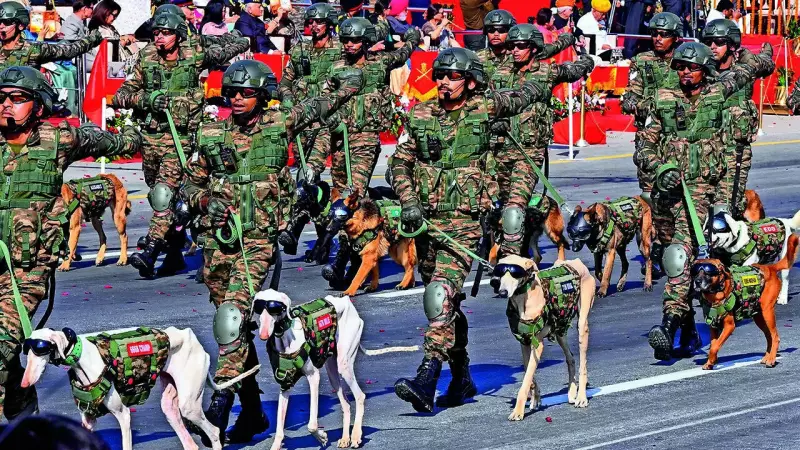
In a landmark moment for India's canine heritage, the nation's indigenous dog breeds made their ceremonial debut at the 77th Republic Day parade in 2026. For the first time in history, breeds including the Rampur Hound and Mudhol Hound proudly marched along Kartavya Path as part of the Indian Army's Remount and Veterinary Corps animal contingent. This historic appearance brought long-overdue public attention to native breeds that have traditionally worked away from the spotlight, guarding villages and accompanying royal hunts for generations.
Army's Conservation Through Service Initiative
The Indian Army's systematic effort to induct indigenous dog breeds into active service represents a significant conservation strategy. Following successful trials with Mudhol Hounds that began in 2016 at the RVC Centre in Meerut, the Army expanded its program to include other native breeds. From an initial group of 22 dogs, ten indigenous canines were carefully selected for the ceremonial Republic Day march, marking a new chapter in India's recognition of its canine heritage.
"Indigenous breeds were not formally inducted until trials with the Mudhol Hound began at RVC Meerut in 2016," explained Shantanu Pratap Singh, PRO Defence Lucknow. "Following the successful training and deployment of Mudhol Hounds, the Army expanded trials for other native breeds, including the Rampur Hound and Rajapalayam."

Preserving India's Canine Legacy
The induction of indigenous breeds serves dual purposes: operational utility and heritage conservation. Many native breeds faced decline after the end of princely hunting traditions, with some like the Rampur Hound becoming increasingly rare. Army induction creates structured demand, systematic breeding programs, and long-term institutional support that helps preserve these breeds' health, working ability, and genetic stability.
"Our objective is not merely deployment, but to ensure that rare indigenous breeds move from a vulnerable status to a stable, self-sustaining working population," emphasized Singh. "In that sense, service with the RVC becomes conservation in action."
Spotlight on the Rampur Hound
The Rampur Hound, a rare sighthound from Uttar Pradesh, represents one of India's most distinguished native breeds. Once numbering around 6,000 in Rampur alone during royal times, the breed had nearly vanished from public memory by the late 1990s. Thanks to conservation efforts led by individuals like retired engineer Irshad Ali Khan, the breed gained international recognition in June 2021 and is now India's only dog breed registered with the World Dog Federation.
Khan, who began showcasing Rampur Hounds at Kennel Club of India dog shows in the late 1990s when the breed was virtually unknown, played a crucial role in its revival. "People didn't even know about this breed," he recalled. "So, I started taking the breed to the shows. From there began the process of awareness and appreciation towards indigenous breeds."
Operational Excellence and Recognition
Indigenous breeds have demonstrated exceptional capabilities in security and defense roles. The Rajapalayam breed is already being used by the Army and Border Security Force for security missions, while Rampur Hound K9 Babita of BSF was honored with the Sardar Vallabhbhai Patel National K9 Bravery Award 2025 at Hyderabad. This recognition came after her fearless tracking following a border confrontation led to the recovery of firearms and ammunition.
The Rampur Hound's physical characteristics make it particularly suited for demanding roles. Capable of running continuously for five to six kilometers at speeds up to 60 kmph, the breed features a lean frame, small skull, long neck, broad chest, and distinctive body stripes. Their exceptional stamina and efficient blood circulation, attributed to high red blood cell counts, even make them valuable as universal canine blood donors.

Genetic Advantages of Native Breeds
Experts highlight the natural advantages of India's indigenous dog breeds, particularly their adaptation to local conditions. "Indigenous breeds are inherently suited to Indian conditions and are largely trouble-free and disease-resistant," explained dog enthusiast Anurag Mishra. "These dogs adapt to the conditions they are born into, just like humans. Indian breeds have evolved over generations to withstand extreme heat, cold and the varied Indian climate."
This contrasts with many foreign breeds that have suffered from health issues due to unregulated breeding practices in India. Problems like hip dysplasia, digestion issues, and skeletal disorders have made dog ownership more challenging and expensive for owners of imported breeds.
Royal Origins and Heritage
The Rampur Hound traces its origins to Nawab Ahmad Ali Khan Bahadur Rohilla of Rampur, whose passion for hunting led to the development of a native Indian sighthound suited to local conditions. By crossing British Greyhounds with Afghan Tazi hounds, he created a dog that combined agility with climate resistance—qualities foreign breeds lacked.
Today, several indigenous breeds form part of the Army's animal contingent:
- Mudhol Hound (Karnataka): Known for speed, agility and alertness
- Rampur Hound (Uttar Pradesh): Muscular, disciplined and bred for stamina
- Chippiparai (Tamil Nadu): Elegant sighthound, loyal and swift
- Kombai (Tamil Nadu): Fierce guard dog with strong territorial instincts
- Rajapalayam (Tamil Nadu): Tall and powerful, historically used for guarding
Creating Broader Impact
The visibility generated by service in uniform extends well beyond military applications. "The visibility that comes with service in uniform, whether through training demonstrations or ceremonial parades, plays a crucial role," noted Singh. "It creates awareness and confidence among civilian breeders and state police forces, similar to what we saw after the induction of the Mudhol Hound."
The Mudhol Hound's conservation success in Karnataka, supported by a dedicated government breeding and research centre, provides a template for other states. Structured breeding programs help document breeds, maintain lineage, reduce dilution risks, and understand working abilities for defense and security roles.
Irshad Ali Khan emphasized the significance of the Republic Day spotlight: "This was much required. Although it's late, it was the need of the hour for a very long time. It will create a lot of awareness among the general public, which can at least motivate them to recognise and appreciate their own native breeds."
As India continues to celebrate its diverse heritage, the inclusion of indigenous dog breeds in national events represents more than ceremonial participation—it signifies a commitment to preserving living elements of the nation's cultural and biological legacy for future generations.