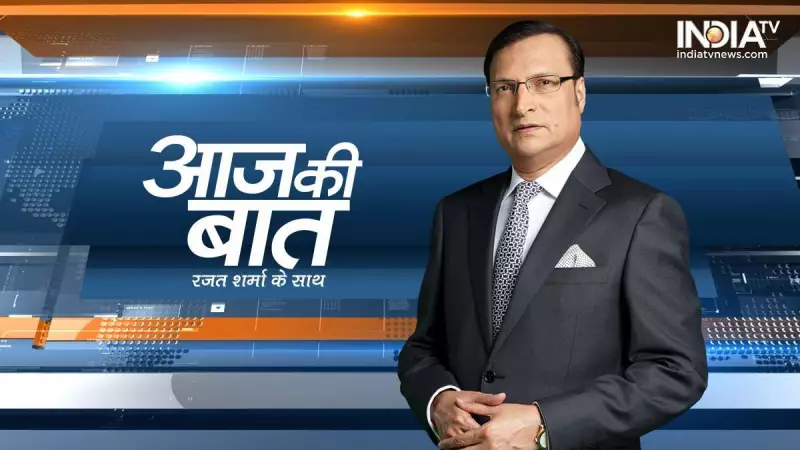
In the latest episode of his flagship show 'Aaj Ki Baat' on January 9, 2026, veteran journalist and India TV Chairman Rajat Sharma delved into three major stories shaping national and international discourse. The episode provided in-depth analysis on the progress of a landmark trade agreement between India and the United States, the escalating protest situation in Iran, and the ongoing political and legal tussle between West Bengal Chief Minister Mamata Banerjee and the Enforcement Directorate.
Breaking Down the India-US Trade Negotiations
The show dedicated significant time to the evolving India-US trade deal, a potential game-changer for bilateral economic relations. Rajat Sharma analyzed the current status of negotiations, highlighting the key sectors under discussion. These reportedly include technology transfers, agricultural market access, and intellectual property rights. The discussion emphasized the strategic importance of this pact, not just for commerce but also for strengthening the broader geopolitical partnership between the two democracies in an increasingly multipolar world.
Experts and sources suggested that both New Delhi and Washington are keen to finalize a mutually beneficial agreement, though sticking points remain. The show underscored how this deal could boost Indian exports, attract higher foreign investment, and create jobs, while also addressing US concerns about market access. The analysis pointed out that the January 9, 2026 context is critical, as both governments face domestic pressures to deliver a win on the economic front.

Iran's Internal Unrest and Global Implications
Shifting focus to international affairs, 'Aaj Ki Baat' covered the widespread Iran protests that have captured global attention. Rajat Sharma detailed the origins and scale of the demonstrations, which are reported to be some of the most significant in recent years. The episode explored the internal socio-political dynamics fueling the unrest and the Iranian government's response.
The show connected these developments to broader regional stability and India's interests. Given India's historical ties and energy needs concerning Iran, the instability poses diplomatic challenges. The analysis considered the potential impact on global oil prices and the delicate balance India must maintain in its foreign policy, engaging with both Iran and its adversaries.
Mamata Banerjee's Confrontation with Central Agencies
On the domestic political front, the episode provided a comprehensive update on the fierce battle between West Bengal Chief Minister Mamata Banerjee and the Enforcement Directorate (ED). Rajat Sharma outlined the latest developments in what has become a protracted confrontation, involving multiple cases and investigations by the central agency against leaders of the Trinamool Congress (TMC).
The show examined the political rhetoric, with Mamata Banerjee accusing the central government of using agencies like the ED for political vendetta, while the ED maintains its actions are purely law-based. This segment highlighted the ongoing tension between the state and central government, framing it as a significant flashpoint in Indian federal politics. The analysis also touched upon the potential electoral and legal ramifications for all parties involved as the situation continues to evolve.
Key Takeaways and Broader Impact
The January 9 episode of 'Aaj Ki Baat' successfully wove together these disparate threads to present a holistic view of current affairs. The India-US trade deal represents a forward-looking economic opportunity. Simultaneously, the Iran protests remind viewers of volatile international dynamics that can affect national interests. Domestically, the Mamata Banerjee vs ED saga underscores the intense and often contentious nature of India's political landscape.

Rajat Sharma's analysis concluded by emphasizing the interconnectedness of these events. Economic diplomacy, global unrest, and domestic political challenges collectively define the nation's trajectory. The show served as a crucial platform for viewers to understand the complexities behind the headlines, providing context and clarity on issues that will likely shape policy and public debate in the coming weeks and months.