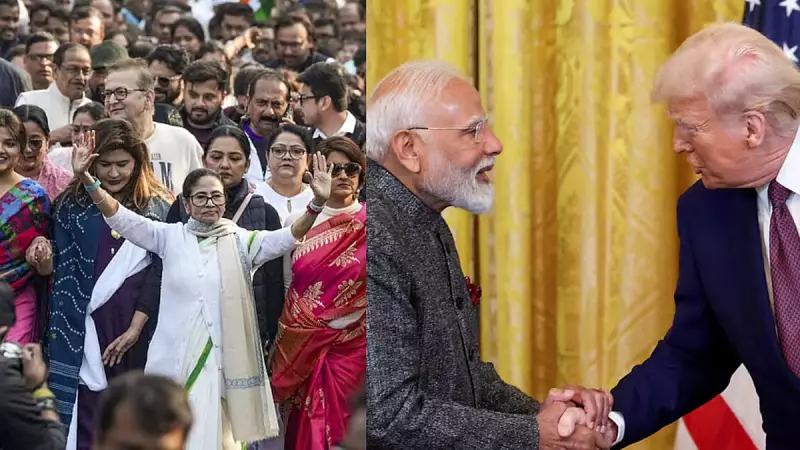
The Ministry of External Affairs (MEA) has firmly rejected a recent report from the United States which suggested limited contact between Indian Prime Minister Narendra Modi and former US President Donald Trump. The MEA clarified that the two leaders have, in fact, spoken on the phone eight times during the year 2025.
Diplomatic Clarification on High-Level Contact
Addressing the media, the official spokesperson for the MEA provided a clear rebuttal to the claims made in the US report. The spokesperson emphasized that the diplomatic channels between India and the United States remain robust and active. The assertion of eight conversations between PM Modi and former President Trump in 2025 underscores the continued importance both nations place on their bilateral relationship, regardless of administrative changes in Washington.
This clarification comes amid ongoing assessments of the India-US strategic partnership. The MEA's statement aims to put to rest any speculation about a cooling off in high-level engagement, reaffirming that dialogue at the highest levels has been consistent.

Mamata Banerjee Leads March Against ED Raids
In a separate but significant political development, West Bengal Chief Minister Mamata Banerjee spearheaded a protest march in Kolkata. The demonstration was organized to condemn the raids conducted by the Enforcement Directorate (ED) on the offices of the Indian Political Action Committee (I-PAC).
I-PAC is a prominent political advocacy group known for its campaign management services. The ED's searches are reportedly part of an ongoing investigation, the specifics of which have not been fully disclosed by the agency. Chief Minister Banerjee, along with leaders and supporters from her party, the Trinamool Congress (TMC), marched in a show of solidarity and defiance against the central agency's actions.
During the protest, Banerjee criticized the central government, alleging the misuse of investigative agencies to target political opponents. She framed the raids as an assault on democratic processes and a tactic to harass those aligned with her party.
Political Repercussions and National Discourse
These two events, though distinct, highlight key facets of India's current political and diplomatic landscape. The MEA's swift correction of the US report reflects a proactive stance in managing India's international narrative and ensuring factual accuracy in perceptions of its foreign engagements.
Simultaneously, the protest in Kolkata led by a senior opposition leader points to heightened political tensions. The confrontation between the TMC and central agencies is likely to fuel further debate on federalism and the autonomy of state governments. The involvement of I-PAC, a key player in election strategy, adds another layer of complexity to the ongoing political rivalry.
Analysts suggest that both developments will have lasting implications. The diplomatic clarification reinforces India's commitment to its strategic ties, while the domestic protest underscores the deepening political fissures as the country moves through its electoral cycle.