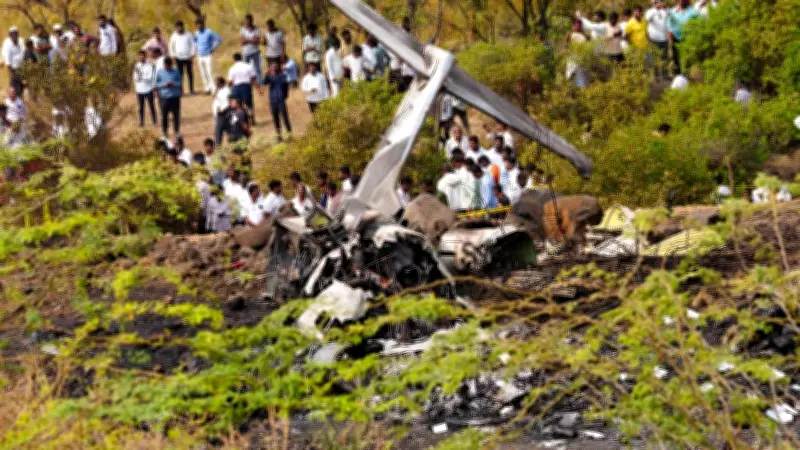
In the aftermath of the devastating chartered aircraft crash at Baramati on Wednesday morning, which claimed the lives of five individuals including Deputy Chief Minister Ajit Pawar, the Indian Air Force has taken swift action by deploying a specialized team to the site. This critical response aims to establish essential air traffic control and meteorological services at the Baramati airstrip, ensuring safety during ongoing operations and official visits.
Immediate IAF Response to Civic Request
The Indian Air Force announced its deployment through a post on social media platform X, stating, "In response to civic authorities' urgent request after the tragic aircraft crash at Baramati Airport, the Indian Air Force has swiftly deployed a dedicated team of Air Warriors. They are providing essential basic Air Traffic Control and Meteorological services to support safe air operations from the site. This rapid assistance underscores IAF's commitment to national service in times of need." This statement highlights the IAF's proactive approach in supporting local authorities during this crisis.
Technical Deployment and Arrival Details
Local officials reported that the IAF team arrived at the Baramati airstrip around 5 pm on Wednesday, transported via an IAF aircraft. The team was subsequently stationed in the Air Traffic Control room at Baramati Airport, where they began their crucial work. From a technical perspective, the deployment of ATC personnel is vital for establishing temporary airspace control and implementing flight safety protocols in and around the accident zone.

Importance of ATC and Meteorological Support
The provision of Air Traffic Control services involves several key functions to maintain safety and order. These include:
- Restricting non-essential air movements in the vicinity to prevent congestion and potential hazards.
- Coordinating rescue and recovery operations with ground teams to ensure efficient response efforts.
- Ensuring safe separation for emergency or relief aircraft operating near the crash site, minimizing the risk of secondary incidents.
Such measures are not only critical for preventing additional accidents but also for allowing investigators uninterrupted access to the crash site, facilitating a thorough examination of the circumstances surrounding the tragedy.
Role of Meteorological Services
Simultaneously, the meteorological team deployed by the IAF is providing invaluable weather data, both real-time and retrospective. This includes detailed information on:
- Wind speed and direction, which are crucial for aircraft takeoffs and landings.
- Visibility conditions to assess operational feasibility.
- Cloud cover, temperature, and atmospheric pressure, all of which impact flight safety.
This meteorological support, combined with ATC services, enables the safe movement of helicopters and other aircraft responding to the site. It is particularly important as key national leaders, including Prime Minister Narendra Modi and Union Home Minister Amit Shah, are expected to visit Baramati to attend the last rites of Ajit Pawar, necessitating secure air operations for official visits.
Broader Implications and Safety Measures
The deployment underscores the IAF's role in national emergencies, extending beyond military operations to assist in civilian crises. By establishing temporary airspace control, the IAF helps mitigate risks associated with increased air traffic in the area, ensuring that rescue and investigative efforts proceed without interference. The meteorological data provided will also aid in understanding weather conditions at the time of the crash, potentially contributing to the investigation into its causes.
This incident has drawn significant attention due to the high-profile nature of the victims, with Ajit Pawar being a prominent political figure. The IAF's rapid response reflects a coordinated effort between defense and civic authorities to manage the aftermath effectively, prioritizing safety and operational efficiency during this challenging period.