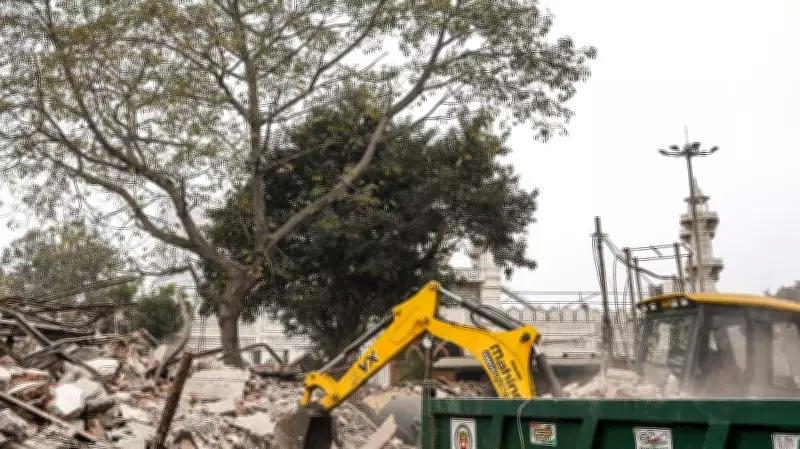
In a rare display of communal harmony, Hindu and Muslim residents of several villages along Rajasthan's international border have come together to protest the demolition of around 12 mosques. The demolitions occurred between June 18 and 20 in villages within a 15-kilometer radius of the border, according to a petition filed in the Rajasthan High Court.
Details of the Demolitions
The petition, submitted by local residents, alleges that the mosques were demolished without prior notice or legal justification. The affected villages are located in the border districts of Sri Ganganagar and Bikaner. The demolitions reportedly took place over a span of three days, with heavy machinery used to raze the structures.
Local authorities have not yet issued an official statement regarding the demolitions. However, the petition claims that the actions were carried out by state agencies without following due process. The Rajasthan High Court is expected to hear the case in the coming weeks.

Hindu-Muslim Solidarity
In response to the demolitions, residents from both Hindu and Muslim communities have organized joint protests. They have formed human chains and held peace marches, demanding that the mosques be rebuilt and that those responsible be held accountable. "We stand together, regardless of our faith," said Ramesh Kumar, a Hindu resident of one of the affected villages. "These demolitions threaten the harmony we have maintained for generations."
The protests have gained attention across the state, with civil society groups and political leaders calling for an investigation. The demonstrations have remained peaceful, with participants emphasizing unity and the rule of law.
Legal and Social Implications
The petition highlights that the demolitions may violate constitutional guarantees of religious freedom. Legal experts say that if the demolitions were conducted without proper orders, they could be challenged in court. The Rajasthan High Court's intervention will be crucial in determining the legality of the actions.
Socially, the incident has sparked a broader conversation about communal relations in border areas. Local leaders have urged restraint and dialogue. "Our strength lies in our unity," said Fatima Begum, a Muslim community leader. "We will continue to protest peacefully until justice is served."
The case is being closely watched as a test of communal harmony in the region. The court's decision could set a precedent for how similar disputes are handled in the future.