The Indian government's recent move to reverse a five-year-old prohibition on certain Chinese companies has ignited a fierce political storm. Senior Congress leaders have launched a scathing attack, framing the decision as a betrayal of national security and a dishonor to the sacrifices of Indian soldiers.
Congress Leaders Condemn Policy Reversal
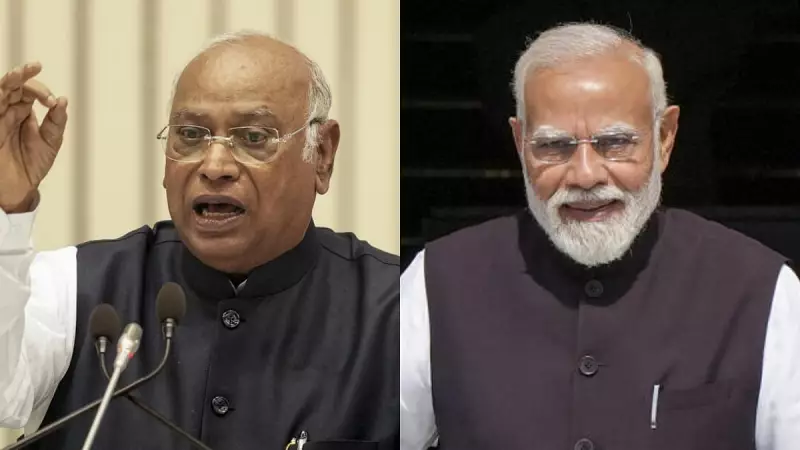
Congress President Mallikarjun Kharge led the charge, posting on social media platform X (formerly Twitter) on January 9, 2026. He starkly contrasted the government's current actions with its earlier rhetoric of not letting the country bow down. Kharge pointed to the lifting of the ban as the "exact opposite" of that promise.
He invoked the Galwan Valley clash, where Indian soldiers made the ultimate sacrifice, accusing Prime Minister Narendra Modi of having already insulted that martyrdom by giving China a "clean chit." Kharge asserted that now, by allowing Chinese companies back, the government is compounding that insult.

Strategic Concerns and Military Warnings Cited
Congress General Secretary Jairam Ramesh amplified the criticism in a separate post on the same day. He provided crucial context, linking the decision to recent geopolitical and military developments. Ramesh highlighted that this move comes merely eight months after Operation Sindoor, a period during which China provided "full military support" to Pakistan and even openly managed fronts against India.
Further strengthening his argument, Ramesh referenced a statement by Lieutenant General Rahul R. Singh, the Vice Chief of Army Staff, who had explicitly labeled China as one of India's "enemies." Against this backdrop of acknowledged hostility and recent military confrontation, the decision to ease restrictions on Chinese entities has been labeled as contradictory and dangerous by the opposition.
Unpacking the Decision and Its Implications
The core of the controversy lies in the government's action to roll back a ban that was imposed half a decade ago on specific Chinese companies. While the official rationale for the reversal has not been detailed in the criticism, the opposition's reaction frames it within a larger narrative of national security and sovereignty.
The key implications raised by the Congress leaders include:
- Strategic Inconsistency: The move is seen as clashing with the hardline stance taken after the Galwan incident and during Operation Sindoor.
- Security Compromise: There are apprehensions about allowing economic engagement with firms from a nation recently identified as an adversarial military power.
- Political Messaging: The decision is portrayed as weakening India's strategic posture and sending mixed signals about its resolve on border and security issues.
The political discourse is now sharply focused on the balance between economic pragmatism and uncompromising national security, setting the stage for a heated debate in Parliament and the public sphere.