The Indian government has initiated the process of lifting a five-year-old ban on certain Chinese companies, a move that has ignited a fierce political storm. The decision, coming amidst ongoing strategic tensions with China, has been met with scathing criticism from the main opposition party, the Indian National Congress.
Opposition Leaders Launch Scathing Attack
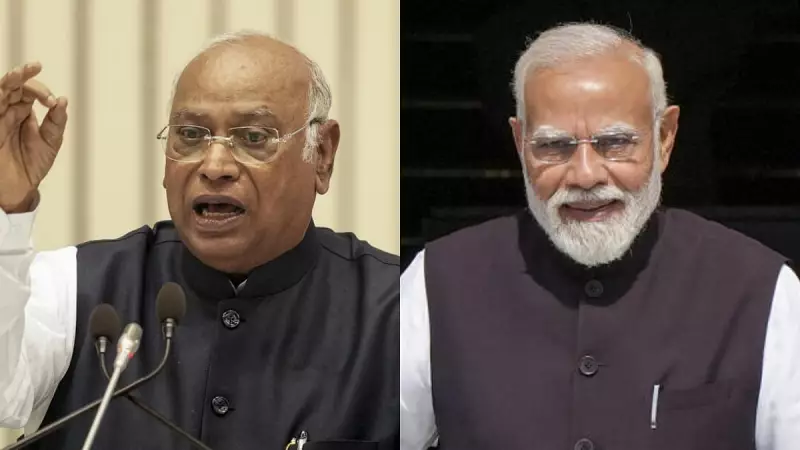
Senior Congress leaders, including party president Mallikarjun Kharge and MP Jairam Ramesh, launched a coordinated attack on the government over the decision on January 9, 2026. In posts on social media platform X, they accused the government of betraying the sacrifices of Indian soldiers and compromising national security.
Kharge directly linked the move to the Galwan Valley clash of 2020, where Indian soldiers lost their lives. He stated that Prime Minister Narendra Modi had already insulted their sacrifice by giving a "clean chit" to China, and now the government was proceeding to remove the ban on Chinese companies.

Context of Military Tensions and Operation Sindoor
Jairam Ramesh provided a broader strategic context to the criticism. He pointed to Operation Sindoor, a period during which China provided "full military support" to Pakistan and openly managed the front against India. This development occurred just eight months prior to the current decision.
Furthermore, Ramesh highlighted that the government's move comes after a senior military official, Lieutenant General Rahul R. Singh, the Vice Chief of Army Staff, publicly identified China as one of India's "enemies." The opposition argues that this makes the decision to ease restrictions on Chinese entities contradictory and weak.
Political Fallout and National Security Debate
The lifting of the ban, which was originally imposed on grounds of national security and data privacy, is now at the center of a major political debate. The Congress party's core accusation is that the government's action contradicts its own strong stance on national security and disrespects the martyrs of Galwan.
The government has not yet issued a detailed public rebuttal to these specific charges. The controversy raises significant questions about the future of India's economic engagements with China amidst unresolved border disputes and deep strategic rivalry. The move is likely to be a key point of contention in the ongoing political discourse, with the opposition framing it as a major policy reversal.