The political landscape has been buzzing with an unusual nickname for former President Donald Trump, as Fox News host Jesse Watters has taken to calling him "daddy" on air, a term that has ignited widespread social media chatter and raised eyebrows across the globe. This moniker, far from fading into obscurity, continues to dominate online discussions, reflecting the polarizing nature of Trump's persona and the media's role in shaping political narratives.
The On-Air Remarks That Sparked Controversy
During a recent Fox News broadcast, live footage showed Trump arriving in West Palm Beach, Florida, with on-screen text boldly declaring, "DADDY'S COMING HOME." Watters amplified this by stating, "Daddy is about to land and he has needs," embedding the nickname into the public consciousness. This was not an isolated incident; earlier this month, Watters used the same term while discussing Europe's resistance to Trump's interest in acquiring Greenland, questioning, "Nato called Trump 'daddy.' Why won’t they give daddy what he wants?" His co-host Jessica Tarlov responded with a pointed retort, "Sometimes daddy needs to be told no," highlighting the tension in international relations.
White House Embraces the 'Daddy' Persona
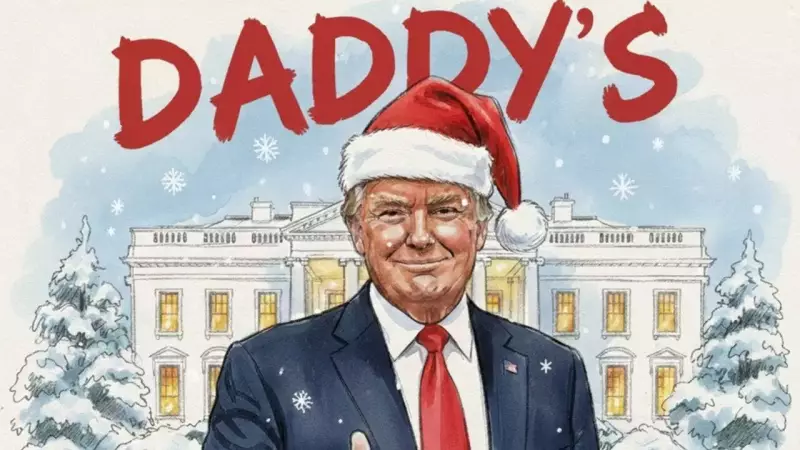
The nickname has even permeated official channels, with the White House releasing a holiday sketch in December 2025 featuring Trump in a Santa hat, captioned "DADDY'S HOME" on their Instagram account. This playful embrace was further solidified when the White House posted a video compilation on X, set to Usher's song "Hey Daddy (Daddy's Home)," with text echoing the theme. Such actions suggest a strategic adoption of the term, blurring the lines between political messaging and pop culture references.

Social Media Backlash and Public Reaction
Netizens have reacted with a mix of cringe and criticism, with many calling out the anchor's remarks as inappropriate. On X, users expressed disdain, with one stating, "Men who lecture others about masculinity (and dye their eyebrows) always have daddy issues," while another speculated, "Something tells me Jesse is on Grindr." Journalist Mehdi Hasan added to the chorus of disapproval by using a vomiting emoji, and others labeled the post as "gross." This backlash underscores the divisive impact of such language in political discourse.
The Origins of the 'Daddy' Term in NATO Context
The trend gained momentum after Trump recalled a statement by NATO General Secretary Mark Rutte, who allegedly referred to him as "daddy" during the World Economic Forum at Davos. Rutte later clarified that he used the term metaphorically to describe the U.S. relationship with other nations, explaining, "In Europe, I hear sometimes countries saying, 'Hey, Mark, will the U.S. stay with us?' And I said that sounds a little bit like a small child asking his daddy." Despite this clarification, the White House has continued to leverage the nickname, fueling ongoing debates about diplomatic decorum and power dynamics.
Implications for International Relations
This episode sheds light on the complex interplay between media, politics, and public perception. Watters' repeated use of "daddy" not only personalizes Trump's role but also trivializes serious geopolitical issues, such as NATO's cohesion and U.S. foreign policy. As social media keeps the conversation alive, it raises questions about how language shapes political identities and the boundaries of acceptable rhetoric in a globalized world.