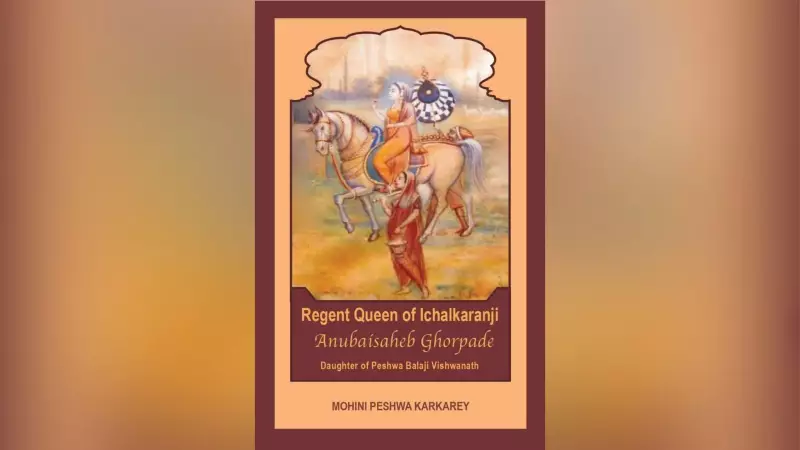
In the grand tapestry of Maratha history, where kings and warriors dominate the narrative, the story of Anubaisaheb Ghorpade stands as a remarkable testament to female leadership and resilience. This forgotten queen, sister of the legendary Bajirao I, ruled as regent for nearly four decades, defending her territory with exceptional skill and earning admiration from contemporaries.
From Child Bride to Formidable Ruler
Anubai Ghorpade lived through 76 years of defining moments in Maratha history, witnessing the rise of her brother Bajirao I, the campaigns of Chimaji Appa, and the eventual decline of the Peshwa dynasty. Married at just six years old to Venkatrao Ghorpade of Ichalkaranji, she transformed from a child bride into a sharp administrator and resilient leader.
Ichalkaranji, strategically positioned between Karveer (modern Kolhapur) and the Carnatic, faced constant military threats during this turbulent period. When her husband was away on campaigns, Anubai took charge of administration, defense, and diplomacy, demonstrating remarkable capability in keeping the principality stable amid political chaos.

The Golden Era of Ichalkaranji
Following Venkatrao's death in 1745, Anubai began her remarkable nearly four-decade reign as regent, a period now remembered as the 'Golden Era of Ichalkaranji.' For forty years, she successfully defended her territory and maintained stability, earning respect from Shahu Maharaj, the Peshwas, and even her enemies.
Author Mohini Peshwa Karkarey, who published 'Regent Queen of Ichalkaranji – Anubaisaheb Ghorpade,' emphasizes that 'her ability to keep Ichalkaranji stable amidst political turbulence speaks volumes of her strength.' Historical records show that enemies respected her courage and judgment, a rare achievement for any ruler of that era.
A Leader of Intellect and Empathy
Anubai's leadership style combined political sharpness with deep humanity. Her letters reveal a woman who was not only commanding armies but also nurturing stability through empathetic governance. She displayed extraordinary emotional resilience despite suffering immense personal losses, including the deaths of her husband and son Narayanrao.
She transformed pain into purpose, focusing her energy on protecting her people and maintaining the dignity of her Sansthan. According to Karkarey, who is herself a descendant of the Peshwas, reconstructing Anubai's story required piecing together scattered references from letters, family archives, and historical documents since written records about the queen were scarce.
Anubai Ghorpade's story represents the countless women who shaped Indian history from the shadows, their contributions often overlooked in traditional historical narratives. Her nearly four decades of successful rule stand as powerful evidence that women leaders played crucial roles in building and maintaining the Maratha empire, even if their stories remain largely untold.