

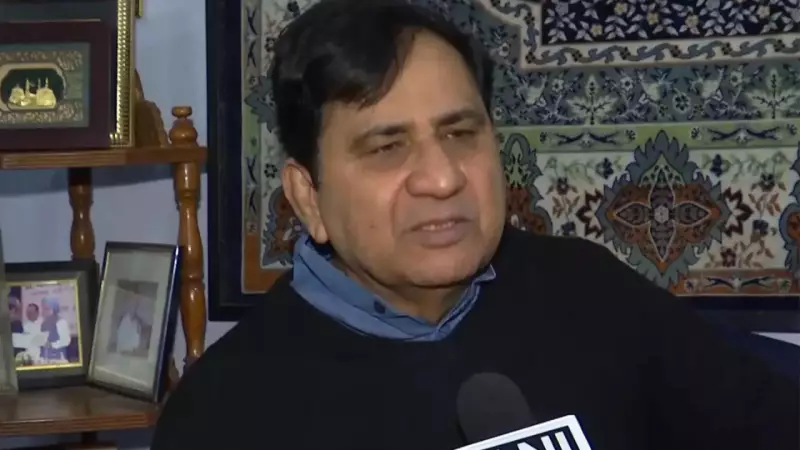
In a revealing interview, former Congress leader and ex-Union minister Shakeel Ahmad has made significant claims about the internal dynamics of the party, particularly regarding the 2022 Congress presidential election. Speaking exclusively to PTI on Sunday, Ahmad asserted that the election's outcome was effectively decided by the backing of Rahul Gandhi and Sonia Gandhi.
The 2022 Congress Presidential Election: A Predetermined Outcome?
Ahmad specifically referenced the October 2022 Congress presidential election, where Mallikarjun Kharge emerged victorious against Shashi Tharoor by a substantial margin. Kharge secured 7,897 votes compared to Tharoor's 1,072, with approximately 9,500 party delegates participating in the internal poll.
"When Shashi Tharoor contested for party president, I wanted to vote for him," Ahmad revealed. "But when I saw that Sonia Gandhi, Rahul Gandhi and others were backing Mallikarjun Kharge, it became clear that whoever the family supports will win."

The former Congress leader emphasized that the visible support from the Gandhi family made the eventual winner apparent long before the votes were counted. This statement sheds light on what many political observers have speculated about the influence of the Gandhi family within the party's decision-making processes.
Sharp Criticism of Rahul Gandhi's Leadership
Ahmad, who resigned from the Congress in November last year, renewed his sharp attack on Leader of Opposition Rahul Gandhi, describing him as an "insecure" political figure who undermines internal democracy within the party.
"Rahul Gandhi is an insecure political leader, I have not seen such insecurity in my life," Ahmad stated bluntly. "He dislikes both kinds of leaders: those who have grassroots influence and those who are charismatic and attract people."
The former minister alleged that decision-making in the Congress party has become concentrated around Rahul Gandhi, with senior leaders being systematically sidelined. According to Ahmad, Gandhi appears uncomfortable working with leaders who possess independent influence or extensive political experience, preferring instead to promote younger leaders who align closely with his vision and approach.
BJP Seizes on the Controversy
The controversy has drawn a sharp response from the Bharatiya Janata Party (BJP), which has seized on Ahmad's remarks to target the Congress leadership. BJP national spokesperson Shehzad Poonawalla stated that Ahmad's statements had "exposed" Rahul Gandhi's leadership style.
"Shakeel Ahmed, who was also a minister, made many revelations," Poonawalla said. "He explained how Rahul Gandhi is an insecure leader. How Rahul Gandhi wants a strong Congress but doesn't want strong Congressmen, and how the Congress party, while proclaiming to the whole world that it is democratic and adheres to the constitution, neither follows the constitution nor practices democracy within the party."
The BJP spokesperson further claimed that Ahmad's comments reflect a broader sentiment within the Congress party. "One thing is clear: Rahul Gandhi plays the biggest role in destroying the Congress, and this is not just Shakeel Ahmed's opinion but the sentiment echoed by every Congress leader," Poonawalla added, intensifying the political debate surrounding the Congress party's internal functioning.
Broader Implications for Congress Party Dynamics
Ahmad's revelations come at a crucial time for the Congress party, which has been grappling with internal challenges and leadership questions. The former leader's comments highlight several critical issues:

- The perceived concentration of power within the Gandhi family
- Allegations of sidelining experienced senior leaders
- Questions about internal democratic processes within the party
- The challenge of balancing established leadership with new talent
These developments raise important questions about the future direction of the Congress party and its ability to present a united front in upcoming political battles. The timing of these revelations, coming from a former minister who was once part of the party's inner circles, adds significant weight to the ongoing discussion about the Congress party's organizational structure and leadership approach.





